🧠 AI Summary:
This guide offers actionable, evidence-based autism hygiene tips to help parents establish successful self-care routines. It explores how to modify overwhelming bathroom environments, apply highly structured visual schedules, use behavior-analytic strategies like prompt fading, and tackle specific pain points like oral care, hair washing, and nail clipping.
Autism Hygiene Tips: Sensory Hacks and Daily Routines Most Families Have Never Tried
Teaching a child with autism to handle personal hygiene can feel like navigating an obstacle course in the dark. Between the blinding glare of bathroom tiles, the unexpected splash of water, and the overpowering artificial scent of soaps, what seems like a simple daily chore to neurotypical adults can feel like a full-blown hostile environment to an autistic child.
If your household experiences daily stalemates over toothbrushing, hair washing, or nail trimming, you are far from alone. Many caregivers find themselves trapped in a cycle of exhausting battles, wishing for practical solutions that look past standard advice.
The good news? The most effective solutions do not require major life disruptions. By understanding sensory needs and adjusting environments, you can change your daily dynamic. At On Target ABA, we guide families every day across Ohio and Utah through these challenges. Here are our top, field-tested autism hygiene tips to reduce stress and help your child build independent habits.
Why Is Personal Hygiene So Challenging for Autistic Children?
To tackle hygiene resistance, we must first understand its source. It is rarely simple defiance. Instead, it is usually a logical response to intense discomfort.
- Sensory Overload: The bathroom is a hub for sensory triggers. Fluorescent bulbs reflect harshly off porcelain. Showers create loud, echoing sounds. Toothpaste has sharp, burning flavors, and wet skin can feel physically painful to a highly sensitive nervous system.
- Executive Function Disruption: Tasks like showering or washing hands look straightforward but actually require complex multi-step planning. A child must figure out what to do first, keep track of steps, know when a step is finished, and switch to the next task smoothly.
- Difficulty with Transitions: Moving from a preferred activity (like playing a game) to an uncomfortable one (like taking a bath) often sparks anxiety and meltdowns.
1. Create a Calming, Sensory-Friendly Bathroom Space
Before asking your child to complete a routine, optimize the physical space to reduce sensory stress.
Adjust the Lighting
Harsh, overhead bathroom lighting is a primary sensory irritant. Try turning off bright ceiling fixtures and using soft floor lamps or warm LED bulbs (the 2700K–3000K range works best). If safety permits, try bathing by dim light or using a battery-powered nightlight.
Control Sound and Echoes
Bathrooms naturally echo, which amplifies the sound of running water or exhaust fans. Lay down thick, plush bath mats and hang heavy towels to absorb extra sound waves. Keep the bathroom door slightly open to reduce that trapped, echoing feel.
Let Your Child Choose Their Products
Give your child a voice by letting them make structured choices between two safe alternatives. Let them pick their favorite character towel, or decide between a bar of soap or liquid body wash. Giving choices builds control and reduces task anxiety.
2. Use Visual Supports and Clear Structure
Children with autism process visual details much more easily than spoken instructions. When a child is anxious, complex spoken commands like “Go get ready for bed and brush your teeth” can feel overwhelming.
+————————————————————-+
| MY 4-STEP MORNING HYGIENE |
+———————+———————+—————–+
| 1. Wet Brush 🪥 | 2. Add Paste 🧴 | 3. Brush 2 Min ⏱️ |
+———————+———————+—————–+
| 4. Rinse Mouth 💧 | Done! 🎉 | |
+———————+———————+—————–+
Build a Detailed Task Analysis
Break down large personal care tasks into small, chronological steps. For example, handwashing isn’t just one action—it is a sequence of five distinct parts:
- Turn on the water.
- Wet your hands.
- Pump the soap.
- Rub your hands together for 20 seconds.
- Dry hands with a towel.
Display these steps clearly next to the sink using simple pictures or quick check-off lists.
Use the First/Then Method
Structure your requests clearly using a dependable template: “First [hygiene task], then [preferred reward].”
- “First brush teeth, then we read your favorite comic book.”
- “First take a bath, then you get 15 minutes of tablet time.”
This approach removes confusion, keeps the sequence predictable, and makes the reward clearly visible.
Use Visual Countdowns and Timers
Autistic children often have trouble tracking time, making them worry that a painful task will last forever. Use sand timers, visual countdown apps, or a favorite 2-minute song to show exactly when the task will end.
3. Targeted Hacks for Specific Hygiene Problems
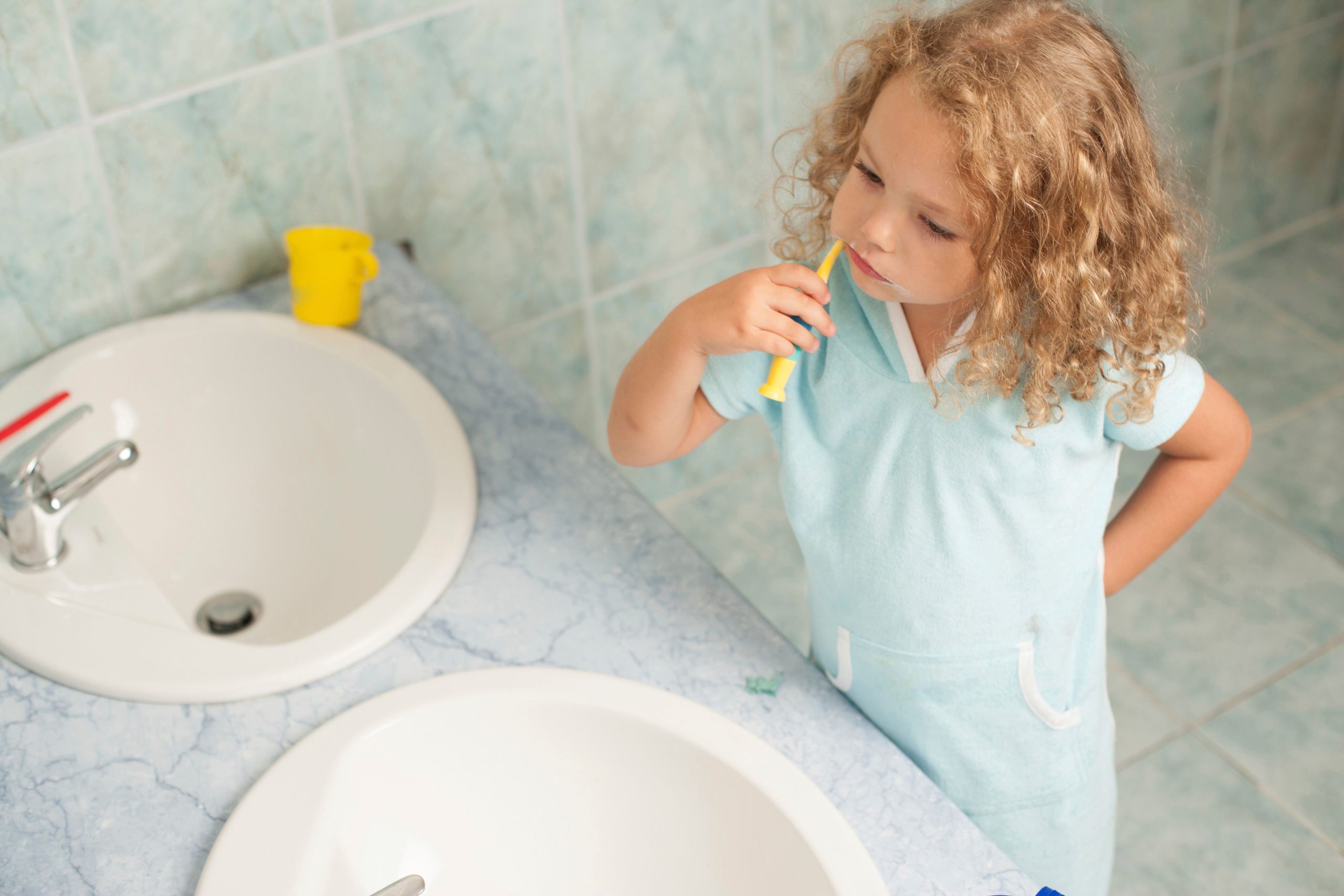
Oral Care Strategies
- Rethink the Flavor: Standard adult mint toothpastes often burn sensitive mouths. Switch to unflavored, mild fruit, or bubblegum alternatives.
- Modify the Tool: If standard nylon bristles feel too abrasive, try an ultra-soft silicone toothbrush. You can also look into three-sided or U-shaped toothbrushes, which clean all sides of the teeth at the same time to speed up the process.
Stress-Free Hair Washing
- Avoid Direct Faucet Spray: The sudden pressure of a showerhead can trigger a fight-or-flight response. Instead, let your child sit in a shallow bath and use a small cup or a damp sponge to rinse hair slowly.
- Keep Water Out of the Eyes: Use a specialized swim visor or a dry washcloth held over the eyes to keep water and soap off their face.
- Lean on Dry Shampoo: On high-stress days when a full bath is impossible, use unscented dry shampoo or rinse-free cleansing wipes to keep hair clean without a meltdown.
Gentle Nail Trimming
- Time It Right: Trim fingernails right after a bath when the nails are softest and easiest to clip.
- Try Alternate Tools: If the sharp “click” sound of traditional nail clippers causes panic, switch to an electric, whisper-quiet baby nail file to smooth down edges gently.
4. Build Independence with ABA Strategies
As your child grows more comfortable with these steps, use structured learning methods to help them practice independence.
[ FULL ASSISTANCE: Hand-over-hand help ]│▼
[ PARTIAL HELP: Guiding the elbow ]│
▼
[ VISUAL PROMPTING: Pointing to the picture checklist ]│
▼
[ TOTAL INDEPENDENCE: Child does the task alone ]
Apply Systematic Prompt Fading
Start by providing direct physical assistance (like hand-over-hand help to brush their teeth). Over time, slowly reduce your support: move to guiding their elbow, then pointing to visual checklists, until they can complete the routine entirely on their own.
Practice Consistent Routines
Make sure all caregivers, teachers, and therapists follow the exact same steps and use identical language. Consistency helps children master routines much faster and prevents confusion between different households or settings.
Caregiver Reflection: Co-Regulation is Key
The most important sensory environment your child interacts with is your energy. Children with autism are highly sensitive to their caregivers’ stress. If you approach bath time feeling tense and expecting a battle, your child will immediately mirror that anxiety.
Before starting a difficult hygiene routine, take five seconds to lower your shoulders, unclench your jaw, and take a deep breath. Slow down your speech and keep your movements predictable. Approaching these moments with calm co-regulation can change the course of the entire evening.
Start Small Today
You do not need to rewrite your entire schedule tonight. Pick just one strategy from this guide—like switching to an unflavored toothpaste or putting a visual schedule by the sink—and practice it consistently for two weeks. Small, deliberate updates build up over time to create smooth, successful routines.
At On Target ABA, our clinical teams work closely with families to design customized, high-leverage strategies tailored to your child’s specific sensory profile and daily life. Whether your child participates in center-based care or in-home therapy, we are here to support your whole family.
📍 Serving families across Ohio (Gahanna, Worthington, Nela Park, Mayfield) and Utah (Murray, Salt Lake City area).
👉 Contact On Target ABA Today to find out how our personalized ABA services and caregiver coaching can bring peace back to your home routines.
❓ Frequently Asked Questions
What should I do if my child completely refuses to brush their teeth?
Start away from the bathroom entirely. Practice touching the toothbrush to their lips or teeth while sitting on the couch during a favorite show. Slowly pair the tool with positive rewards before introducing toothpaste or moving back to the bathroom sink.
How do I handle hygiene transitions when my child experiences meltdowns?
Use clear visual schedules and give warnings well ahead of time (e.g., “In 5 minutes, tablet time ends and bath time begins”). Pair this with the First/Then format so they always know a preferred activity is waiting for them afterward.