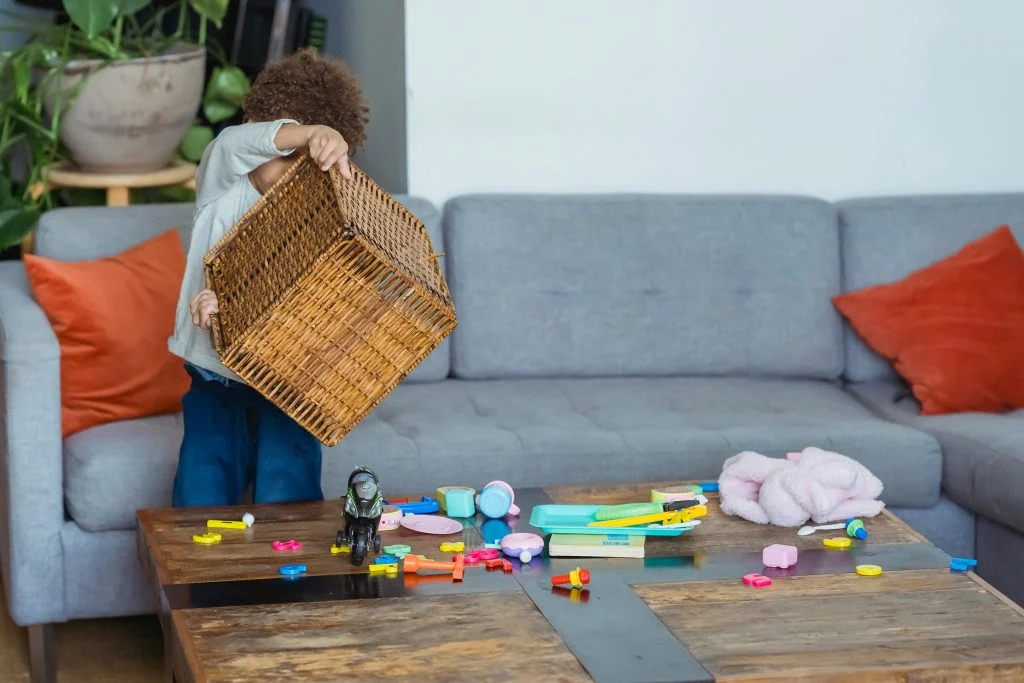
Throwing behavior is one of the most common and confusing challenges families of children with autism face. If your child or toddler with autism throws toys instead of playing with them, or is in the habit of flinging random objects, understanding why it happens and having strategies to address it can be helpful.
In this guide, On Target ABA, experienced providers of ABA therapy, explain why children with autism throw toys and other objects, what those behaviors communicate, and how evidence-based ABA strategies can help.
Key Takeaways on Why Kids With Autism Throw Things
- Throwing things in autism often serves a purpose, such as communicating a need, seeking sensory input, escaping a situation, or expressing frustration.
- Punishment or simply telling an autistic person to stop throwing is unlikely to be effective if the underlying cause of the behavior is not addressed.
- Identifying the function of the behavior and using individualized strategies can help reduce throwing behaviors.
- Professional support such as ABA therapy is recommended if throwing behaviors are frequent, severe, pose a risk of injury or property damage, or do not improve despite consistent, evidence-informed strategies.
Why Do Kids With Autism Throw Things?
It happens in an instant. One moment your child is playing, and the next a toy is sailing across the room. Maybe it is the third time today. Maybe it happens every day. And maybe, despite every intervention you have tried, you still are not sure exactly why your child does this.
Throwing is one of the most commonly reported challenging behaviors in children with Autism Spectrum Disorder, and it shows up across all ages and developmental levels. For many families, it is also one of the most exhausting and difficult to address, not just because of the safety concerns, but because it can feel completely unpredictable.
But throwing behavior in autism is often not random. Identifying what may be triggering or maintaining the behavior can help us develop strategies to address it.
The three most common reasons for throwing things in autism are:
- Communication challenges
- Sensory stimulation
- Frustration and emotional dysregulation
Below, we explore these reasons in more detail.
Communication Challenges
Children with autism may struggle to communicate their wants and needs effectively; some are nonverbal, and even some who can communicate verbally struggle to deliver the words and feelings behind them. Due to ineffective communication skills, they may begin throwing things.
Common messages that children with autism might be trying to convey when they throw objects include:
- “I want something.” A child who cannot verbally request a snack, a preferred toy, or even an adult’s attention may resort to throwing to express that want. The throw gets a reaction, which means it worked.
- “I don’t want this.” Throwing food off a tray, pushing a toy away, or launching a book or other object across the room can all be ways of saying “I am done” or “I don’t like this.”
- “I need help.” Frustration builds quickly when a task is too hard or a need goes unmet for too long, and sometimes throwing serves as a let-out.

Seeking or Escaping Sensory Stimulation
- For some children, the sensory input of throwing – the motion, the sound of impact, or the visual of something flying through the air – is very reinforcing. They might get sensory input from the sound of a toy crashing, the motion of their arm during the throw, or even just watching something sail through the air.
- Alternatively, sensory avoidance can also cause a child to throw. If a child with autism is bothered by the texture or smell of a particular item, they may throw it away to escape the sensory discomfort.
Frustration and Emotional Dysregulation
Children with autism may also throw things when they are feeling frustrated or dysregulated. Sensory overload, anxiety, frustration, or emotional dysregulation can all boil over into physical behavior. An overwhelmed child may resort to throwing objects because they often don’t have a better tool available.
Throwing can also release intense feelings, much like neurotypical children may cry or shout.
What Does NOT Help Throwing Behavior and Why
Before moving to effective strategies for addressing throwing in autism, it is worth addressing common, instinctive responses that can make throwing worse rather than better.
- Giving in after a throw. If a child throws a toy and then receives the desired item – a snack, a break, a toy, or a preferred activity – the behavior has been reinforced. The child has learned that throwing works.
- Long verbal explanations. Many autistic children have difficulty processing lengthy spoken language, especially when they are already dysregulated. A long lecture about why throwing is wrong is unlikely to be understood and may actually increase agitation.
- Punishment without teaching. Taking away toys or sending a child to their room addresses the behavior after the fact but does not teach the child what to do instead. Without a replacement behavior for throwing objects, the function of the throwing remains unmet, and the behavior will return.
- Ignoring all throwing. Simply ignoring throwing is not appropriate in every situation. The response should depend on what is maintaining the behavior. For example, if throwing is used to gain attention, reducing attention following the behavior may be part of an individualized plan. If throwing is used to escape a task, a different approach may be needed. Because these strategies can sometimes lead to an initial increase in challenging behavior, develop and implement them with guidance from a qualified professional.
How to Effectively Respond to and Reduce Throwing
Several approaches can help with throwing behavior in autism. The following strategies focus on reducing throwing behaviors by addressing their underlying causes and supporting more appropriate ways to communicate needs and cope with challenges.
Functional Communication Training (FCT) for Throwing
Functional Communication Training (FCT) is one of the most powerful ABA tools for addressing challenging behavior driven by communication deficits, and it involves teaching replacement behaviors for throwing objects. In FCT, the child is taught an alternative way to communicate the same message – for example, by using a word, a sign, a picture exchange, or an AAC device – and the alternative is reinforced consistently.
Instead of throwing a cup when a child wants milk, they are taught to say “milk” or point to their cup. All behavior serves a purpose. Replacement behaviors are taught to serve the same purpose as the problem behavior, but more effectively.
To be useful, the replacement behavior needs to be easier and more effective than throwing, at least initially. If asking for a break takes ten steps and throwing immediately ends the demand, the child will throw. The replacement has to work faster and more reliably in the early stages, to encourage regular use.
Visual Supports to Help With Throwing
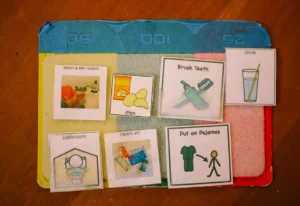
Many children with autism have difficulty processing spoken language and respond better to visual cues.
Visual supports reduce the cognitive and communication load that often precedes throwing. When a child can clearly see what comes next and what is expected of them, the uncertainty that triggers frustration is reduced.
One effective visual support is a First/Then board, with a picture of the desired behavior under the “first” column and a picture of something the child enjoys/wants under the “then” column. Pictures depicting a child’s daily routine, or a list of upcoming activities, can also help a child understand what will happen and reduce anxiety.
Positive Reinforcement of Replacement Behaviors
When a behavior is followed by something that is valued, such as a reward, the child is more likely to repeat that behavior. In the early stages of introducing a new skill or replacement behavior, reward the child the moment the desired behavior occurs. Even an attempt toward the desired behavior should be freely rewarded.
Reinforcement needs to be immediate and meaningful to the individual child. Generic praise alone is rarely sufficient. The reinforcer must be something the child values.
Environmental Modifications to Help Prevent Throwing
Sometimes the most effective intervention is adjusting the environment before the problematic behavior occurs. This might mean:
- Reducing the number of throwable objects accessible during high-risk times
- Providing a calm, low-stimulation space the child can access when dysregulated
- Reducing sensory triggers that precede throwing episodes
- Building in more predictability and warning before transitions
Teaching Emotional Regulation Skills
Teaching relaxation strategies, such as deep breathing, helps kids manage frustration or anxiety without resorting to harmful behaviors.
For a child with autism who is throwing things in response to emotional dysregulation, building a toolkit of regulation strategies such as deep breathing, movement breaks, access to a sensory tool, and a visual emotion chart gives them options other than throwing when feelings become overwhelming.
Providing Sensory Alternatives
If throwing serves a sensory function, as the child loves the proprioceptive input of the throw itself, sensory alternatives can safely redirect that need. Heavy work activities, throwing games with appropriate targets, weighted tools, and other sensory-rich activities can meet the same need in a socially acceptable way.
When to Bring in a Professional for Throwing Behaviors
Home strategies can make a meaningful difference, but frequent throwing or behaviors that put anyone at risk warrant professional support. An ABA therapist can develop a personalized, function-based plan to address throwing behavior using strategies such as positive reinforcement, Functional Communication Training (FCT), and teaching appropriate replacement behaviors.
It is also worth ruling out underlying medical factors when a child is throwing. Throwing can sometimes be linked to pain or discomfort that the child cannot otherwise communicate, such as ear infections, gastrointestinal issues, dental pain, or sensory discomfort from an undiagnosed condition. If throwing behavior starts suddenly or increases significantly in frequency, a medical evaluation is a reasonable first step.
Get Support for Throwing Behaviors in Autism
Raising a child with autism who throws things can be exhausting, stressful, and sometimes scary. But throwing behavior is not a character flaw in your child, and it is not a reflection of your parenting. It is a behavior with a function, and functions can be changed.
If we focus on underlying needs, adjust the environment, and offer better tools for communication and regulation, many children with autism can learn safer, more appropriate ways to express themselves.
At On Target ABA, our team of BCBAs and RBTs is experienced in assessing and addressing challenging behaviors such as throwing. We work with families to understand the why behind every behavior and build a plan that works for your child and your family.
If you are ready to get support, reach out to On Target ABA today. You do not have to figure this out alone.
FAQs on Children With Autism Throwing Things
Is dumping toys a sign of autism?
Dumping toys alone is not a sign of autism. Many infants and toddlers dump, empty, and scatter toys as a normal part of exploring cause and effect, movement, and play. Autism is identified by a pattern of differences in social communication and restricted or repetitive behaviors.
Is throwing things a sign of autism?
Throwing things alone is not a sign of autism. Many infants and toddlers throw toys, food, or other objects as part of learning cause and effect, motor skills, and attention. Autism is diagnosed based on persistent differences in social communication and restricted or repetitive behaviors across multiple settings.
How should I discipline a child with autism for throwing things?
Respond to throwing by teaching a replacement behavior instead of relying on punishment. Stay calm, block unsafe behavior, remove dangerous objects, and avoid reinforcing the throwing with extra attention. Identify why the child is throwing, such as seeking attention, escaping a task, sensory input, or communicating frustration. Praise and reward appropriate alternatives consistently.
Is throwing a form of stimming?
Throwing can be a form of stimming, but it is not always stimming. Some people with autism throw objects to seek sensory input, release strong emotions, or regulate their nervous system. Others throw objects to express frustration, to escape a difficult task, or to gain attention.