🧠 AI Summary:
Sensory play in ABA therapy helps children with autism regulate their bodies, stay engaged, and learn new skills in a natural, joyful way. This blog explains why sensory play matters, what it looks like in ABA sessions, and how parents can recognize meaningful progress—even when it appears subtle at first.
ABA Therapy & Sensory Play: How It Works and How to Tell Your Child Is Making Progress
Many parents peek into an ABA session and see their child scooping rice, painting with shaving cream, bouncing on a ball, or playing in water—and they wonder:
“Is this really therapy?”
“Are we making progress?”
“How do these sensory activities help?”
Those questions are completely normal. Sensory play is one of the most misunderstood parts of ABA, but it’s also one of the most powerful.
Let’s explore why sensory play is used, how it supports learning, and how you can tell when your child is progressing—even when the steps are small.
Why Sensory Play Is So Important for Children With Autism
Every child experiences the world through their senses. But for children with autism, sensory information can feel overwhelming or confusing—too loud, too bright, too sticky, too fast, or sometimes not stimulating enough.
Sensory play gives children a safe, predictable way to explore:
- textures
- movement
- sounds
- visuals
- pressures
- temperatures
When a child can process sensory input better, everything else improves—communication, attention, learning, emotional regulation, and daily routines.
But sensory play isn’t just “fun.” In ABA therapy, it is purposeful, structured, and individualized based on your child’s needs.
What Sensory Play Looks Like in ABA Sessions
Sensory play can be calming, energizing, or exploratory depending on what the child needs. It may include:
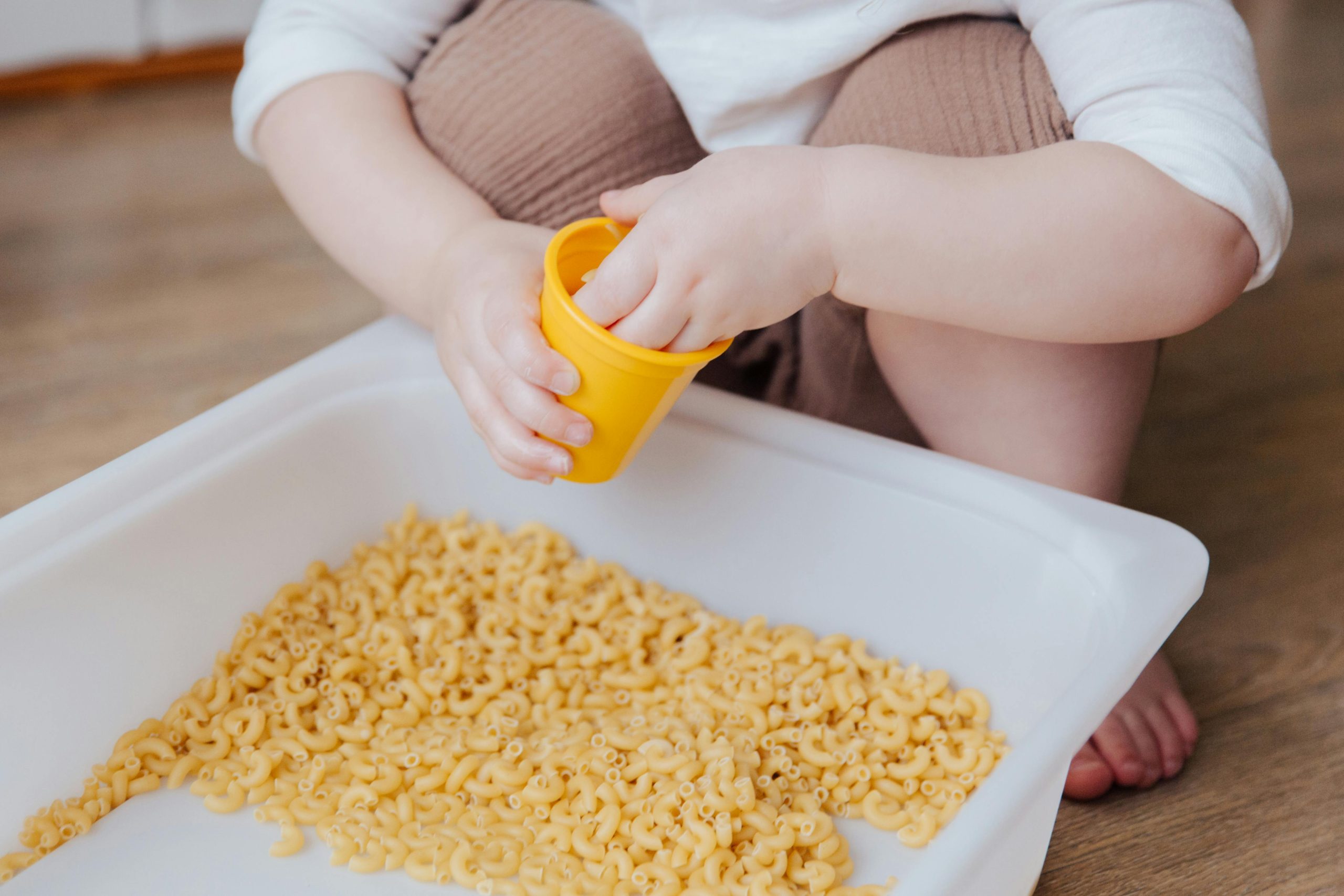
- Water bins, shaving cream, finger paint
- Kinetic sand, rice tables, play dough
- Swings, trampolines, scooters, obstacle paths
- Body socks, weighted toys, vibration or deep pressure
- Light tables, bubbles, glitter jars
Your child’s BCBA selects sensory activities intentionally—never randomly. They are chosen because they support a skill that your child is working on.
A sensory activity might target:
- communication (“more,” “help,” “stop,” “go”)
- joint attention
- tolerance of textures
- turn-taking
- following directions
- reducing anxiety or overstimulation
This means sensory play is not “extra.” It is part of the therapy plan.
Why Sensory Play Helps Learning Happen
Children learn best when their bodies feel regulated.
When sensory needs are unmet, learning becomes harder.
But when sensory needs are met, children can:
- focus longer
- follow instructions more easily
- transition more smoothly
- use more language
- stay calmer
- engage socially
- enjoy learning
Think of sensory play as the bridge that helps a child’s brain feel safe and ready to grow.
How to Know Your Child Is Making Progress
Progress in sensory-based ABA therapy doesn’t always show up as big leaps. Often, it begins with tiny changes that reveal huge improvements in comfort, confidence, and regulation.
Here are signs of real progress:
1. Your child tolerates new sensations more calmly
Maybe they used to avoid sticky textures but now touch shaving cream with one hand.
Or maybe sounds that once caused meltdowns now feel manageable.
These changes mean your child’s sensory system is adapting—and that is powerful progress.
2. Transitions become smoother
Sensory play is often used to support transitions between tasks.
If your child can move from a preferred activity to a non-preferred one with fewer tears or delays, that’s a major step in flexibility and regulation.
3. Communication happens more naturally
Many children begin requesting during sensory play:
- “More bubbles”
- “My turn”
- “All done”
- Using PECS or AAC
- Pointing or gesturing
When motivation is high, language (in any form) tends to grow.
4. Your child stays engaged longer
If your child begins participating for longer periods—seconds turning into minutes—that’s a clear sign their attention, regulation, and comfort are improving.
5. Emotional regulation improves
You may notice:
- fewer meltdowns
- fewer escape behaviors
- shorter recovery time
- more smiling and laughter
These are some of the most meaningful successes in therapy.
6. Behavior challenges decrease
When sensory needs are supported, children show fewer frustration-based behaviors.
If your child is calmer, more cooperative, or showing fewer outbursts, the sensory work is helping.
7. Independence increases
Your child may begin:
- picking up toys
- choosing activities
- transitioning with a visual schedule
- completing a task without help
These steps—though small—signal growing confidence.
What Parents Often Miss (But Therapists Notice Immediately)
Sometimes progress is subtle:
- A child looks at an activity they once ignored
- They reach out instead of pulling away
- They touch a new texture for two seconds
- They climb one step higher
- They request “more” without prompting
These micro-progress moments can feel tiny, but together they create major developmental breakthroughs.
Your ABA team sees these changes and tracks them through daily data so that you always know what improvements are happening—even when they’re quiet or gradual.
How You Can Support Sensory Learning at Home
You don’t need a fancy sensory room to encourage progress. You can offer:
- water play during bath time
- a rice bin or dried beans
- shaving cream on the table
- playground swings
- play dough or slime
- bubbles, chalk, or simple crafts
Follow your child’s lead.
Watch what brings calm or joy.
Use sensory play as a chance to bond, communicate, and explore together.
Final Thoughts: Sensory Play Is Real Progress, Not Just Play
Sensory play helps a child:
- regulate
- calm their body
- process their environment
- engage
- communicate
- learn
- grow
It is one of the most foundational tools in ABA therapy because it supports the whole child—not just their behavior or skill goals.
And the progress you see—even the small steps—is worth celebrating.
If you ever have questions about your child’s sensory needs or progress, your On Target ABA team is always here to guide you, explain the data, and support your child’s growth with care and intention.