🧠 AI Summary:
Supporting your child’s communication doesn’t require specialized training — it begins with everyday moments, connection, and small strategies parents can weave into daily routines. In this blog, we share simple, practical, parent-led approaches grounded in ABA principles to help children with autism build confidence, express their needs, and connect more meaningfully with the world around them.
The Power of Meeting Your Child Where They Are
Every child with autism communicates in their own way. Some use words, others use gestures, others may communicate through actions like pulling your hand toward something they want. Instead of worrying about what communication “should” look like, we focus on what your child is already doing — and build from there.
If your child points, you can point back.
If they glance at something they want, you can label it.
If they hand you a toy, you can turn it into a small interaction.
These little moments are often where the biggest communication gains begin.
Making Communication Part of Play (Because Kids Learn Best When It’s Fun)
Children learn language through joy — not pressure. If you sit down and say “Time to practice talking,” most kids tune out. But when they’re excited, curious, or having fun, their brain is primed to connect words with meaning.
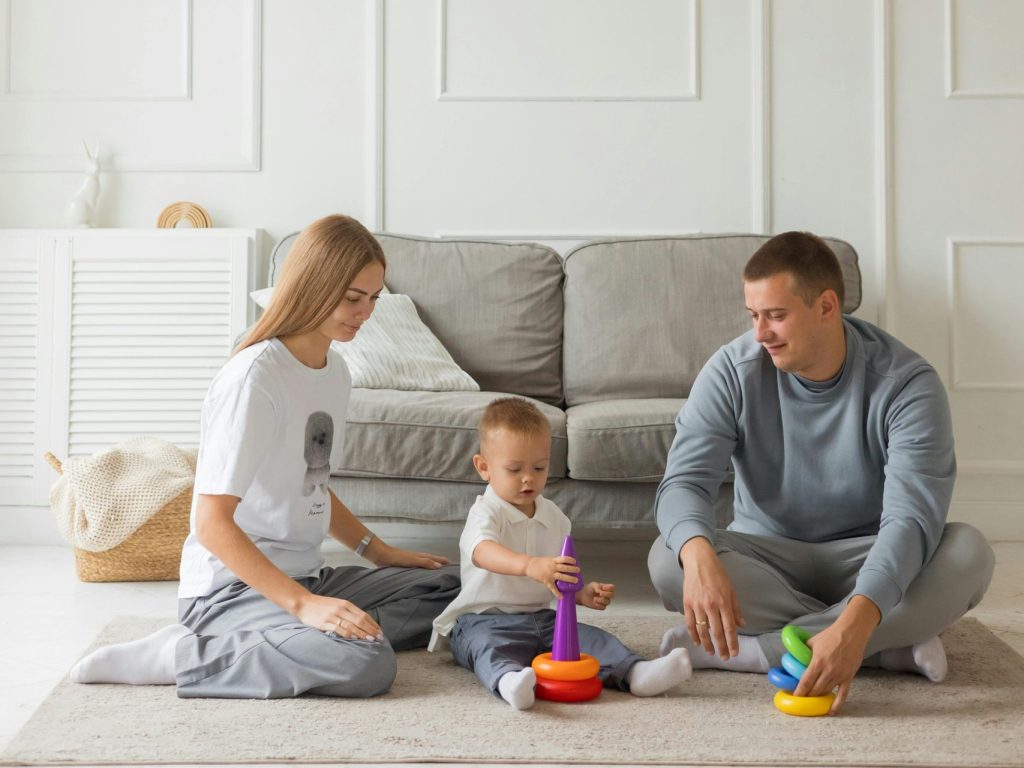
One of the easiest ways to support communication is to follow your child’s lead. If they’re rolling cars, roll one with them and name what you’re doing. If they love swinging, pause the swing and wait for them to look at you — that tiny pause gives them an opportunity to request “more,” sign for more, reach toward you, or indicate in any way that they want the fun to continue.
These small exchanges teach a huge lesson: communication makes things happen.
Using Daily Routines as Built-In Learning Moments
Routines are powerful because they repeat every day. Meals, bath time, car rides, putting on shoes — these moments become predictable teaching opportunities.
During breakfast, you might pause before giving them the spoon and wait for a gesture or sound.
During bath time, you can label bubbles, water, washcloths, and body parts.
During car rides, you can comment on what you see, even if they don’t respond yet.
Parents often underestimate how much language their child absorbs through simple, loving repetition.
Creating Opportunities Instead of Giving All the Answers
Children sometimes need a reason to communicate. That doesn’t mean making things difficult for them — it just means leaving small opportunities open so they can take part in the interaction.
Instead of opening every snack bag automatically, you might hand it to them closed so they can request help.
Instead of setting up every toy, you might wait and let them show you what they want.
Instead of answering immediately, you might pause for a few seconds to give them the chance to initiate.
These small adjustments aren’t about withholding — they’re about inviting your child into the moment.
Celebrating Every Communication Attempt (Even the Small Ones)
One of the most important things we teach families is that communication is so much more than words. A glance, a sound, a point, a smile, or an attempt to imitate something you said — these are all meaningful steps. When a child feels successful, they’re motivated to keep trying.
So when your child makes any communication attempt — even a small one — celebrate it. Smile, respond enthusiastically, give them the item they requested, or join them in the activity. This not only strengthens language skills, but it strengthens your bond.
When to Bring in Professional Support
Parent-led strategies are incredibly powerful, but many families also benefit from professional guidance. In ABA therapy, communication goals are individualized, which means your child’s program is tailored to how they learn best. Therapists can help identify why communication might be challenging and provide structured steps to support language, gestures, imitation, and social skills.
At On Target ABA, we work hand-in-hand with parents to ensure that communication support isn’t something that happens only in a therapy room — it becomes part of your family’s everyday rhythm.
Final Thoughts: You’re Not Just Teaching Communication — You’re Building Connection
When it comes to communication strategies for children with autism, the most important thing to remember is that you’re not trying to “fix” anything. You’re helping your child connect with the world in a way that feels safe, natural, and meaningful to them.
Every shared smile, every imitation, every request, and every moment of connection is communication. And when parents and therapists work together, those moments grow into skills that last a lifetime.
If you ever feel unsure about what to try next, need guidance, or want to explore center-based ABA therapy, our team is here to help your child — and your family — thrive.