🧠 AI Summary:
If you’ve ever wondered why a child’s ABA therapy session involves bubbles, pretend kitchens, bowling games, and sensory bins — this blog is for you. Play isn’t a break from therapy at On Target ABA. It IS the therapy. This post breaks down the science behind play-based ABA, what skills are being built inside every joyful activity, why engaged children learn faster, and what it means when a child actually looks forward to their sessions. Because joy is not separate from progress — it’s the pathway to it.
It Doesn’t Look Like What You Think
If you drop your child off at an ABA therapy session and peek through the window, you might not immediately recognize what you’re seeing as therapy.
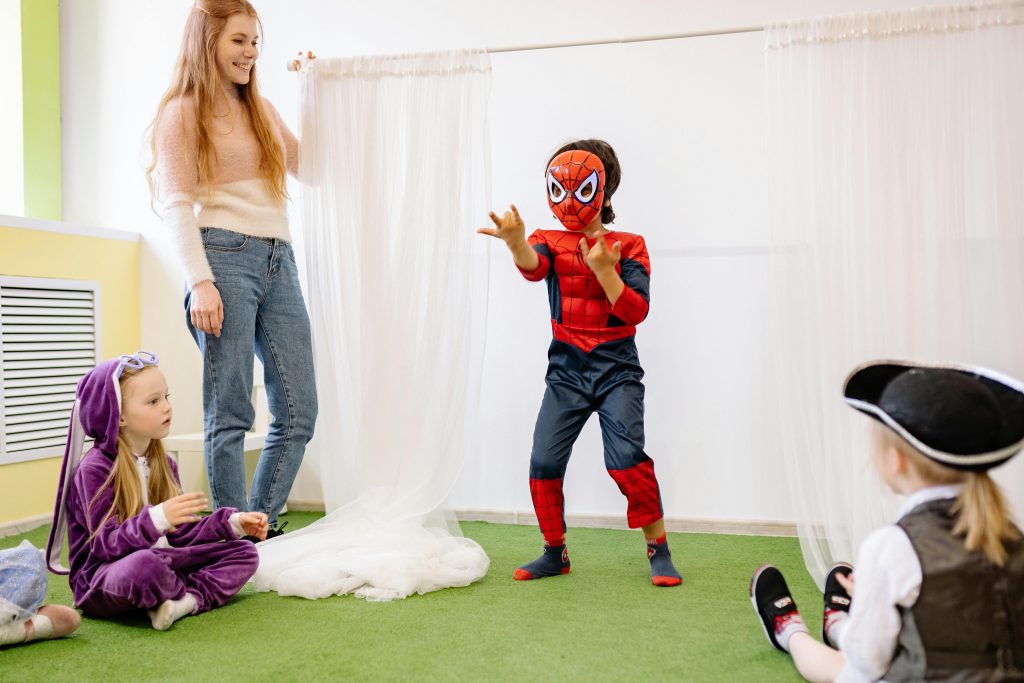
You might see a child and their RBT on the floor together, blowing bubbles and laughing. You might see two kids taking turns rolling a bowling ball, cheering for each other with genuine enthusiasm. You might see a pretend kitchen set up in the corner where a child is “cooking” and narrating what they’re making to their therapist.
It looks like play. It looks like fun. It looks like childhood.
And that’s exactly the point.
Play-based ABA therapy is not therapy in disguise as play. It’s therapy that recognizes something fundamental about how children — and especially children with autism — learn best: when they are engaged, motivated, and genuinely enjoying what they’re doing, learning happens faster, sticks longer, and generalizes more readily to real life.
This blog is about why that’s true, what’s actually happening during those joyful sessions, and why “the best part of their day” is also the most effective intervention your child can receive.
The Science: Why Play Is the Ideal Learning Environment
Play is the main occupation of children. This isn’t a sentimental statement — it’s a developmental fact backed by decades of research. The American Academy of Pediatrics emphasizes that play is essential for child development, which supports the integration of play within therapeutic frameworks.
For children with autism specifically, play-based approaches offer something that more traditional, table-based instruction often can’t: a learning environment that matches how the brain is naturally wired to acquire skills.
Here’s what research consistently shows about play-based ABA:
Engagement drives acquisition. The enjoyable nature of play increases motivation during therapy sessions, leading to higher levels of participation and engagement. Research indicates that children experience fewer tantrums and challenges during play-based interventions compared to traditional methods such as using flashcards.
Faster skill development. Due to its engaging format, play-based therapy often results in faster skill acquisition, allowing children to learn adaptive behaviors in a less threatening and more enjoyable environment.
Better generalization. Structured and naturalistic play activities create engaging sessions that motivate children to actively participate. This active engagement makes it easier for them to generalize the skills they learn to real-life situations, enabling practical application in various contexts.
Stronger therapeutic relationships. Play therapy emphasizes relationship-building trust with the person through interaction and having fun with the therapist. The therapeutic relationship that develops through shared play is not incidental to progress — it is the foundation of it.
In other words, the fun is functional. The joy is the mechanism.
What’s Actually Happening During Play
This is where the magic of play-based ABA becomes visible. Every activity that looks like simple fun is carefully constructed by your child’s BCBA to target specific, measurable therapeutic goals. Here’s a window into what’s really happening:
🫧 Bubble Play
A child chasing bubbles and giggling isn’t just having a good time. They’re:
- Practicing requesting — learning to say or sign “more,” “bubbles,” or “pop” to get what they want
- Building joint attention — looking at the bubbles, then at the therapist, sharing the moment
- Developing eye contact — natural, unpressured, within a joyful context
- Working on breath control — if the child is blowing the bubbles themselves
The bubble isn’t the lesson. The bubble is the vehicle.
🎳 Bowling
Two children taking turns rolling a ball at pins are working on:
- Turn-taking — waiting, watching, attending to a peer
- Frustration tolerance — managing the disappointment of missed pins
- Cooperative play — setting up the pins together, cheering for each other
- Language — labeling numbers, colors, celebrating (“Strike!”)
- Social reciprocity — the back-and-forth exchange that is the foundation of all conversation
🎭 Pretend Kitchen Play
A child “cooking” dinner for their therapist is building:
- Symbolic thinking — using one object to represent another
- Vocabulary — food names, verbs, describing words
- Functional communication — making requests, offering things, narrating action
- Narrative understanding — beginning, middle, end of a scenario
- Social imagination — inhabiting a role and responding to another person’s role
🧩 Building Blocks and Puzzles
- Problem-solving and persistence — working through frustration toward a goal
- Following directions — “Put the red block on top”
- Imitation — copying the therapist’s building sequence
- Fine motor skills — grip, placement, coordination
- Labeling — colors, shapes, sizes, positions
🎨 Art and Sensory Activities
- Sensory regulation — managing tactile input, building tolerance
- Choice-making — selecting colors, materials, subjects
- Creativity and self-expression — building confidence
- Vocabulary expansion — describing textures, actions, outcomes
- Parallel and cooperative play — working alongside or with peers
🎵 Music and Movement
- Rhythm and sequencing — the same cognitive skills underlying language
- Following multi-step directions — “Clap twice, then jump”
- Imitation — copying movements and sounds
- Emotional regulation — music as a self-soothing and energizing tool
- Social engagement — shared experience through song and movement
The Role of Natural Environment Teaching (NET)
Play-based ABA therapy is closely tied to what behavior analysts call Natural Environment Teaching — or NET. This approach integrates therapy into the environments and activities where a child naturally spends their time, rather than isolating skills practice to a table and chair.
Therapists use child-led and spontaneous forms of play, like pretend play and cooperative games, to target specific developmental goals. This approach not only makes therapy sessions more enjoyable but also reduces anxiety, helping children feel more in control.
NET in practice looks like this: instead of sitting at a table and being shown a picture of a ball and asked “what is this?” — a child chases an actual ball, rolls it, asks for it back, names it spontaneously, and uses it with a peer. The skill is built where it lives.
This matters enormously for generalization. A skill learned in isolation, at a table, prompted by a flashcard, is much harder to transfer to a playground or a classroom than a skill built through the very experiences it needs to show up in.
A Note to Every Autism Family Reading This
If you are in the thick of it right now — in the exhaustion, in the advocacy, in the waiting and the hoping and the working — we want you to know that we see you.
Not the polished version of you. The real one. The one who cried in the parking lot and then went back inside. The one who is Googling things at midnight. The one who loves their child with a fierceness that has no adequate vocabulary.
This matters enormously for generalization. A skill learned in isolation, at a table, prompted by a flashcard, is much harder to transfer to a playground or a classroom than a skill built through the very experiences it needs to show up in.
The Therapeutic Relationship: Why the Fun Matters
There’s something else happening during joyful ABA sessions that doesn’t always get named — and it’s one of the most important factors in therapy outcomes.
The therapeutic relationship.
Play fosters trust. It creates safety. It communicates to a child: “This person is here for you, not just for your behavior. This person enjoys being with you. This space is good.”
Parents and therapists report that children participating in play-based ABA therapy often express enjoyment and eagerness to engage in sessions. Many children have shown remarkable progress, with reports of improved communication, social skills, and emotional regulation.
When a child is excited to go to therapy — when they ask for it, when they run in the door — they arrive in an optimal neurological and emotional state for learning. Their nervous system is regulated. Their defenses are down. Their motivation is high. Their brain is open.
This is the state in which breakthroughs happen.
What BCBAs Do Behind the Scenes
None of this is accidental. The playfulness of a session is the visible surface of a great deal of careful clinical work happening beneath it.
Before a child ever enters the room, their BCBA has:
- Conducted a preference assessment — identifying which activities, toys, and sensory experiences are most motivating for that specific child
- Written individualized goals — each one tied to a measurable outcome and a clinical rationale
- Designed activities that embed those goals — so that the bubble play targets requesting, the bowling targets turn-taking, and the pretend kitchen targets symbolic communication — simultaneously and naturally
- Established a data collection system — so that every session produces real information about what’s working, what isn’t, and what to adjust
During the session, the RBT is:
- Implementing the BCBA’s program with fidelity
- Collecting data on every targeted skill
- Providing reinforcement at precisely the right moments
- Adjusting in real time based on the child’s engagement and regulation
- Building the relationship that makes the learning possible
After the session, the BCBA reviews the data, identifies patterns, and adjusts the program for next time.
The playfulness is intentional. The joy is clinical.
What Happens When a Child Loves Coming to Therapy
When a child looks forward to therapy — when they ask about it between sessions, when they run to their favorite RBT — something important is happening beyond the obvious.
They are building a relationship with learning itself.
They are developing the experience of being understood, of being seen, of working hard at something and succeeding. They are learning that challenges can be fun, that other people are enjoyable to be with, that they are capable and worthy of connection.
These are not peripheral outcomes of ABA therapy. They are central to everything therapy is trying to build.
A child who loves coming to therapy is a child who is developing a relationship with growth. And that relationship will serve them long after the formal sessions have ended.
What This Looks Like at On Target ABA
At On Target ABA, play isn’t a treat at the end of a hard session. It’s the session.
Our BCBAs assess each child’s motivators during the intake process and build those preferences directly into their therapy program from day one. Our RBTs are trained not just to implement therapeutic strategies, but to be genuinely present and playful — to be someone a child is happy to see.
Our centers are designed to support play-based therapy: equipped with sensory rooms, play spaces, outdoor areas, and materials that reflect the diverse interests and needs of the children we serve.
We serve children ages 2–12 across Ohio and Utah in center-based, home-based, and school-based settings. And we train parents to extend the playful, intentional approach of therapy into the everyday moments of home life — because the best learning doesn’t stop when the session ends.
For Parents: What to Look For in Play-Based ABA
If your child is currently in ABA therapy, here are signs that the play-based approach is being implemented well:
- Your child is excited to go — enthusiasm for therapy is a meaningful clinical signal
- Sessions feel natural and warm — not rigid or clinical in tone
- Goals are embedded in preferred activities — not treated as separate from the “fun part”
- Your child’s interests are actively used — the therapist knows what motivates your child specifically
- You can see the targets in the play — if you ask “what is this activity working on?” there should be a clear, specific answer
- Data is being collected — even in the midst of joyful play, progress is being tracked
And if your child dreads therapy, or seems disengaged, or doesn’t appear to have a warm relationship with their therapist — those are worth discussing with your BCBA. A child who loves their sessions is not just a happier child. They’re a child making more progress.
Frequently Asked Questions
Q: Is play-based ABA less rigorous than traditional ABA?
Not at all. Play-based ABA is evidence-based ABA. The goals, data collection, and clinical oversight are identical. What changes is the delivery method — and research consistently shows that naturalistic, play-based delivery produces better generalization and often faster acquisition than table-based instruction alone.
Q: How does a BCBA know which activities to use?
Through a process called a preference assessment — a structured evaluation that identifies which items, activities, and experiences are most motivating for a specific child. This information drives the design of every session.
Q: What if my child isn’t very playful or doesn’t know how to play?
Teaching play skills is often one of the first goals in an ABA program for younger children. BCBAs work systematically to expand a child’s play repertoire — because play isn’t just a means to other goals. It’s a goal in itself, and one that unlocks everything else.
Q: Can I incorporate play-based strategies at home?
Absolutely — and you should. Parent training is a core component of quality ABA therapy precisely because the most powerful learning happens in the natural moments of daily life. Your BCBA and RBTs will teach you how to embed your child’s therapeutic goals into the activities and routines you already share.
At On Target ABA, we design therapy sessions that your child will actually look forward to — because we know that a child who is engaged, motivated, and joyful is a child who is learning.
→ Contact us to learn about our play-based approach
→ Read: Turn-taking and pretend play in ABA therapy
→ Read: What to expect in your child’s first ABA session
→ Read: How long does ABA therapy take to work?
→ Contact us to learn about our services
→ Read: Practical daily life tips for autism caregivers
→ Read: Easter self-care for autism caregivers
→ Read: What is a BCBA and why does caseload size matter?