
🧠 AI Summary:
Visual schedules are a powerful tool used in ABA therapy to help children with autism navigate routines, transitions, and expectations with confidence. This blog explains how visual schedules work, why they are so effective, and what progress looks like. It also offers simple ways parents can use visual schedules at home to support independence, reduce frustration, and create smoother daily routines.
Visual Schedules in ABA Therapy: How They Help Children With Autism Thrive
If you’ve ever watched your child become overwhelmed by transitions, routines, or unexpected changes, you are not alone. Many parents of children with autism share similar experiences—mornings that feel rushed and stressful, transitions that bring tears, or simple routines that somehow become complicated.
It’s not that your child is unwilling; it’s that the world moves quickly, and spoken language can be unpredictable or hard to process.
This is where visual schedules in ABA therapy become life-changing.
Visual schedules help children see what is coming next, understand routines more clearly, and feel safer navigating their day. And when anxiety decreases, confidence and independence naturally increase.
Let’s explore how visual schedules work, why they are used in ABA therapy, and how you can use them at home to support your child’s growth.
What Is a Visual Schedule?
A visual schedule is a sequence of images, symbols, or written words that represent the order of activities for a child. It could show:
- the child’s morning routine
- today’s therapy activities
- steps for getting ready for bed
- the sequence of a class schedule
- the individual steps of a task (washing hands, brushing teeth, etc.)
Visual schedules make life more predictable. They take the place of verbal reminders, reduce confusion, and help children feel more in control of their environment.
When children understand what’s happening next, they can navigate their day with fewer emotional spikes and more confidence.
Why Visual Schedules Work So Well for Children With Autism
Visual schedules are widely used across ABA therapy, early intervention programs, and autism classrooms. They work because many autistic children are strong visual learners. They process information more successfully when they can see it rather than just hear it.
Here are a few key benefits:
1. Reduces Anxiety Around Transitions
Transitions are often challenging because children don’t know what’s coming or how long an activity will last. Visual schedules create certainty and comfort.
When a child sees:
“First snack → then play → then swing time,”
they feel calmer and more prepared.
2. Improves Independence
Visual schedules remove the need for constant adult prompting. Instead of waiting to be told what to do next, the child can refer to the schedule independently.
This strengthens:
- self-help skills
- confidence
- autonomy
- self-monitoring
3. Supports Emotional Regulation
When children know the plan, their bodies and minds can relax. Emotional distress during transitions decreases, and children begin to manage change more easily.
Even small shows of flexibility—like switching the order of two activities—become easier over time.
4. Supports Communication
Not all children can ask, “What’s next?” or “When are we done?” A visual schedule answers these questions without requiring speech.
For children who use PECS or AAC, visual schedules naturally support communication growth.
5. Helps Children Understand Time and Sequence
Understanding “first, next, then, last” is an important cognitive skill. Visual schedules teach this concept naturally, through practice and repetition.
Types of Visual Schedules Used in ABA Therapy
ABA professionals customize visual schedules to match each child’s learning style. Some children need photos, others prefer icons, and some respond well to written lists.
Here are common types:
1. Full-Day Schedules
These show the entire sequence of the day’s events.
2. Half-Day or Partial Schedules
Used when a full schedule feels overwhelming.
3. Mini-Schedules
Break down complex tasks into small, clear steps (ex: washing hands: “turn water on → soap → scrub → rinse → dry”).
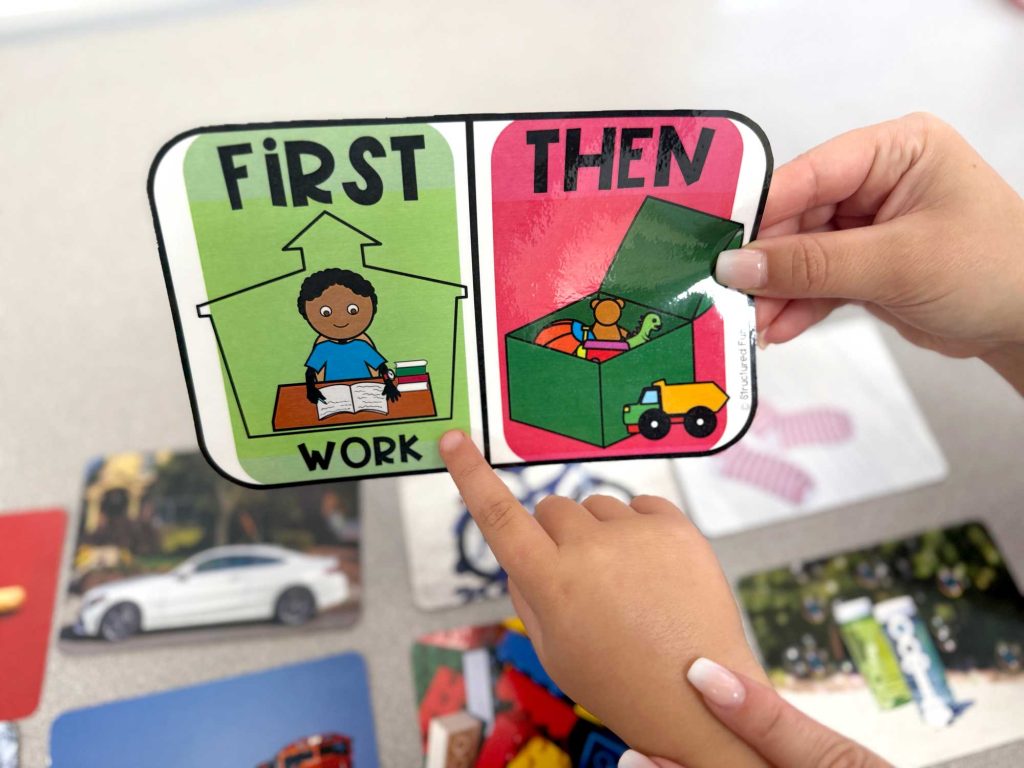
4. First–Then Boards
A simple visual showing what happens now and what comes next:
First work → Then playground
This reduces resistance and builds motivation.
5. Portable Schedules
Schedules attached to clipboards, key rings, or communication devices—great for community outings.
How ABA Therapists Use Visual Schedules During Sessions
In ABA therapy, visual schedules are not just displayed—they are practiced, referred to, and reinforced throughout the session.
Therapists may::
- point to the schedule before transitioning
- show the child how to move a picture once an activity is complete
- check the schedule together to reduce uncertainty
- pair verbal language with visual cues
- adjust schedules to promote flexibility
Therapists also measure how independently the child can use the schedule. Over time, the therapist steps back so the child becomes more self-directed.
How to Know Visual Schedules Are Helping Your Child
Parents often wonder what progress looks like—and it’s often more subtle than expected. Here are meaningful signs that your child is growing:
1. Transitions Become Smoother
Less crying, fewer meltdowns, fewer refusals.
Your child moves from one task to another with less resistance.
2. Fewer “What’s next?” Moments
Your child anticipates the next step without needing verbal reminders.
3. Increased Independence
Your child checks the schedule on their own or moves icons independently.
4. Reduced Frustration
Your child appears calmer and more regulated throughout the day.
5. Better Task Completion
Your child sticks with routines or activities longer with fewer interruptions.
6. More Flexibility Over Time
At first, visual schedules provide predictability. Later, they help teach adaptability when the schedule changes.
Every small success signals growth.
How Parents Can Use Visual Schedules at Home
You don’t need a fancy system to get started. Visual schedules work best when integrated into everyday routines.
Simple ideas include:
Morning Routine
- breakfast
- brush teeth
- get dressed
- school
Bedtime Routine
- bath
- pajamas
- story
- sleep
Chores & Responsibilities
- clean up toys
- feed pets
- put clothes in hamper
Outings
- car → store → snack → home
Start small. Celebrate each success. Over time, your child will begin relying on the schedule naturally.
Common Parent Concerns (and Reassuring Answers)
“Will my child become dependent on visual schedules?”
No. Visual schedules teach independence. As skills grow, the schedule is slowly faded.
“What if my child resists at first?”
Most children need time to get used to any new system. Consistency helps.
“My child can talk—do they still need this?”
Many verbal children still benefit because visual schedules reduce cognitive load and help clarify expectations.
“Do visual schedules limit flexibility?”
Actually, they teach flexibility by preparing children for change in a safe, predictable way.
Final Thoughts: Visual Schedules Build Confidence and Independence
Visual schedules may look simple, but they hold tremendous power. They help children:
- understand their day
- predict transitions
- feel calmer
- communicate more effectively
- build independence
- gain confidence in daily routines
At On Target ABA, visual schedules are a core part of teaching because they empower children to navigate the world with clarity and comfort.
Whether at the clinic, school, or home, visual schedules open doors for children who learn best by seeing the plan—and that small spark of understanding often leads to big, beautiful growth.