
🧠 AI Summary:
Encouraging independence in a child with autism starts with small, achievable steps. Using routines, visual supports, modeling, positive reinforcement, and the right level of prompting can help your child learn skills confidently and safely. This blog explains how parents can build independence at home using ABA principles, one success at a time.
How to Encourage Independence in a Child With Autism: A Parent-Friendly Guide
Helping a child become more independent is one of the most meaningful goals for many parents. While every child with autism develops at their own pace, independence is absolutely possible—and ABA therapy offers many tools to help your child grow confident and capable in everyday tasks.
At On Target ABA, we work closely with families to break skills down, support each step, and celebrate each win. The key is starting where your child is today and building gradually.
Below are parent-friendly ways to begin encouraging independence in a child with autism at home and in daily routines.
1. Start With Small, Doable Tasks
Independence doesn’t begin with big life skills—it begins with achievable moments.
Examples of small but meaningful independent tasks:
- Throwing away their snack wrapper
- Putting shoes in a cubby
- Pressing the button to start the washing machine
- Carrying their backpack to the car
Every small success boosts your child’s confidence, and those wins stack up over time.
2. Use Visual Supports to Build Understanding
Children with autism often learn best when they can see what’s expected.
Helpful visual tools include:
- Visual schedules
- First/Then boards
- Step-by-step picture directions
- Labeled bins and toy boxes
Visuals reduce anxiety, make routines predictable, and give your child the clarity they need to complete tasks independently.
3. Model the Skill First
Sometimes children need to watch you complete the task first.
For example:
- Show how to zip a jacket slowly.
- Demonstrate how to wash hands with clear steps.
- Model how to ask for help when stuck.
Model → Practice together → Try independently.
This is a core ABA approach we use daily.
4. Use Prompting—But Fade It Gradually
Prompting helps your child complete a task successfully, but fading prompts is what builds independence.
Types of prompts:
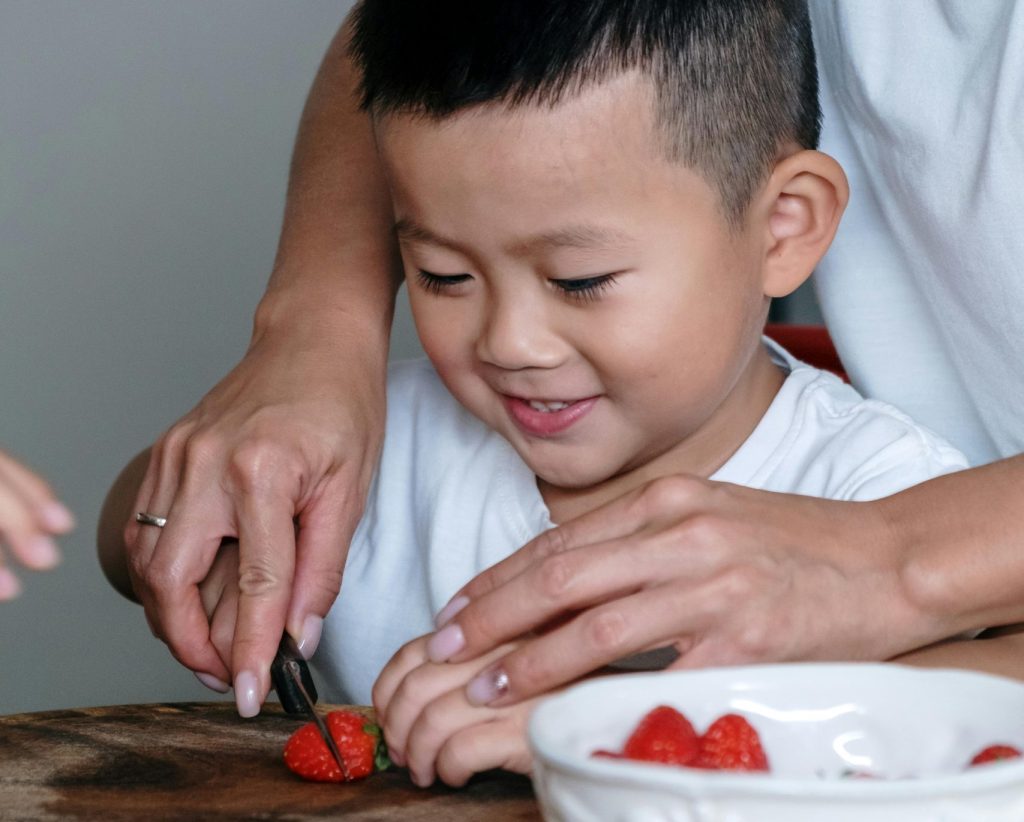
- Hand-over-hand assistance
- Gentle gestures
- Verbal reminders
- Visual cues
- Pointing to needed items
The goal: give as little help as possible, then fade it once your child shows progress.
5. Reinforce Every Independent Attempt
Reinforcement is how children learn what behaviors are “worth repeating.”
Reinforcers may include:
- Praise (“You put your shoes on by yourself! I’m so proud of you!”)
- Stickers or tokens
- A favorite activity
- Extra playtime
When independence feels good, children want to try again.
6. Turn Routines Into Opportunities for Learning
Daily routines are the perfect place to practice independence:
Morning: choosing a shirt, brushing hair
Meals: throwing away trash, carrying dishes
Playtime: cleaning up toys, choosing activities
Bedtime: washing face, picking pajamas
Consistency builds mastery—and routines make it predictable.
7. Offer Choices to Build Confidence
Choices create independence.
Simple examples:
- Do you want the blue cup or the green cup?”
- “Should we read this book or that one?”
- “Do you want to brush teeth first or wash hands first?”
Choices reduce frustration and allow your child to feel in control.
8. Celebrate Progress, Not Perfection
Independence is a journey, not a race.
Celebrate:
✔ Trying a new task
✔ Completing one step of a routine
✔ Asking for help appropriately
✔ Staying calm during a challenge
Every attempt matters—and every win deserves recognition.
When ABA Therapy Helps Most
ABA therapy supports independence by breaking skills into smaller parts, teaching each step clearly, and reinforcing success along the way. At On Target ABA, we help children learn:
- Self-care routines
- Communication skills
- Emotional regulation
- Play and social independence
- Daily living tasks
- School readiness skills
Parents are always part of the process, so independence continues at home too.
Final Thoughts: Independence Begins With Belief
Encouraging independence in a child with autism means giving them the tools—and the confidence—to shine. With patience, clear routines, visual supports, and ABA strategies, your child can grow into a more confident and capable version of themselves.
At On Target ABA, we’re here to walk with your family every step of the way.