An autism diagnosis often comes with a list of recommended therapies and raises questions for parents about the types of therapy for autism available. What does each therapy address? How does each type differ from ABA? Does your child need one approach or several providers working on separate goals?
The answer begins with your child rather than a therapy label. A child who does not yet have a reliable way to request food needs different support from one who needs instruction in eating a broader range of foods. Understanding what the different types of therapies for autism address gives you a clearer basis for comparing their methods with your child’s goals.
At On Target ABA, we want parents to understand the full range of alternative therapies for autism available to their children. This guide explains how ABA, speech therapy, occupational therapy, feeding therapy, CBT, and DIR/Floortime differ, as well as where their goals overlap so you can determine what therapy is best for autism and for your child.
Alternatives to ABA Therapy: Key Takeaways
- ABA teaches specific skills and addresses behaviors by examining what happens before and after them.
- Speech, occupational, and feeding therapies are common ABA alternatives that address specialized areas such as communication, daily activities, sensory needs, and eating.
- CBT focuses on how thoughts influence emotions and behavior, while DIR/Floortime builds interaction through play and relationships.
- The child’s specific goals should determine the therapy.
- Different therapies may form part of the same treatment plan when each provider has a defined role and coordinates with the rest of the team.
What Are Autism Therapies and Who Are They For
Understanding what the different therapies for autism are starts with recognizing that autism therapies support skills that affect a child’s daily life, such as managing emotions and completing tasks independently. They do not seek to eliminate autism or require an autistic person to hide harmless traits. Instead, therapy focuses on areas where the child needs support to participate more fully in everyday life.
The right approach depends on the child’s age, communication style, current skills, and treatment goals. A young child who cannot yet request food may need a different program from a teenager learning to manage anxiety or an adult preparing for employment. Some people with autism receive structured therapy for several hours each week, while others need support in only one specific area.
Behavioral Therapies for Autism
Behavioral therapies look at a child’s behavior in the context of what is happening around them. By understanding what tends to lead to a behavior and what happens afterward, therapists can determine what the child may need to learn and whether changes to the environment could make a skill easier to develop.
Treatment may address communication, self-care, school participation, social interaction, or behaviors that place the child or others at risk. Each program begins with an assessment and uses measurable goals based on the child’s needs rather than a standard list of behaviors associated with autism.
Applied Behavior Analysis (ABA)
Applied Behavior Analysis (ABA) helps children build skills by teaching them in manageable steps and providing support as they learn. When families ask what the best autism therapy is, ABA is often the starting point because it’s one of the most researched and widely recommended interventions for building functional skills. A child learning to get dressed, for example, may initially need help with each part of the routine. As the child becomes more confident and capable, the therapist gradually steps back until they can complete more of the routine independently.
What ABA looks like depends on the skill being taught. A therapist might practice requesting during play, work on toileting as part of the child’s bathroom routine, or teach safety skills while out in the community. Some programs use named, structured models such as Early Intensive Behavioral Intervention (EIBI) or Pivotal Response Treatment (PRT), while others build skills through less structured teaching moments woven into the child’s day.
Is ABA The Best Therapy for Autism?
ABA is generally considered one of the strongest evidence-based options, although the best fit still depends on the child’s goals. A 2025 systematic review and meta-analysis published by the National Library of Medicine (NIH) found that ABA-based early intervention was associated with meaningful gains in language skills, daily living skills, and adaptive behavior compared with standard care, which is part of why ABA continues to be recommended as a starting point for many families.
For families weighing up if ABA is the best therapy for autism, the answer often comes down to goals: ABA has one of the strongest track records for teaching specific skills and reducing behaviors that get in the way of daily life, though many children benefit from pairing it with other supports.
Cognitive Behavioral Therapy (CBT)
Cognitive Behavioral Therapy (CBT) helps children understand how their thoughts can shape the way they feel and respond to situations. Therapy helps them work through unhelpful thought patterns and develop different ways to respond when those situations arise.
For example, an autistic teenager who expects classmates to reject them may avoid group activities. A CBT therapist can help the teenager examine this prediction and identify what triggers it. Then, they can plan a manageable way to participate. Therapy may also include strategies for responding to anxiety or anger. Changes in routine can also be difficult to manage and may need to be addressed in therapy.
CBT relies on discussing internal experiences and applying strategies outside the session, so it is generally suited to autistic children, teenagers, and adults who can identify and communicate their thoughts and emotions. Because the two approaches serve different goals, many parents compare ABA therapy vs CBT directly before deciding where to start.
Developmental and Play-Based Interventions
Developmental and play-based interventions build on the child’s interests and current stage of development. Much of the learning happens through play and interaction, with the therapist joining what already interests the child and using those moments to encourage communication and connection.
This category includes several alternative therapies for autism, each with different goals. Speech therapy focuses on communication, occupational therapy addresses participation in daily activities, and feeding therapy targets eating-related skills. DIR/Floortime uses play and relationships to support emotional and social development. A 2025 study published in PubMed followed children for six months and found that those receiving ABA showed developmental improvements comparable to children receiving the Early Start Denver Model, suggesting families may benefit from either approach. Play therapy is another option in this category, and families often look at ABA therapy vs play therapyABA therapy vs play therapy to decide which style of learning fits their child best.
Speech and Language Therapy
Children may work with a speech and language therapist when communication is difficult for them. Therapy can help a child better understand what others are saying and communicate more successfully.
Speech therapists also work with children who communicate without speech. They may teach the child to use gestures, pictures, signs, or an augmentative and alternative communication (AAC) device. The goal is to give the child a reliable way to express their needs and feelings. Parents often ask whether ABA therapy helps with speech as well. Many ABA programs build communication goals directly into sessions and coordinate with a speech-language pathologist, so the two approaches frequently work side by side rather than in competition.

Occupational Therapy
Occupational therapy focuses on the skills a child uses to participate in everyday activities. A therapist may work on dressing, handwriting, using utensils, or playing with toys.
Some children with autism also work with an occupational therapist on sensory regulation. The therapist looks at how the child responds to sensory input, such as loud sounds or certain textures. They can then find practical ways to make difficult situations easier to manage. Because both approaches can target similar daily-living goals, it helps to look at occupational therapy vs ABA to see where each one fits best.
Feeding Therapy
Feeding therapy addresses problems with eating, drinking, and participating in mealtimes. A child may accept only a small range of foods, struggle to chew or swallow, or become distressed when an unfamiliar food appears on the plate.
Treatment depends on what is interfering with eating. A speech-language pathologist addresses problems with chewing and swallowing, while an occupational therapist works on sensory responses and mealtime skills. Feeding therapy is one of several ABA alternatives that families often use alongside, rather than in place of, a structured behavioral plan. Behavioral providers examine what happens before and after food refusal and teach the child to approach new foods in gradual steps. The child’s care team also checks for medical problems contributing to feeding difficulties before treatment begins.
DIR/Floortime Therapy
DIR/Floortime uses a child’s interests and relationships with others as a starting point for learning. The approach considers the child’s developmental level, how they experience and respond to the world around them, and how they interact with other people. It is one of several alternatives to ABA that families sometimes use alongside, rather than instead of, a structured behavioral program.
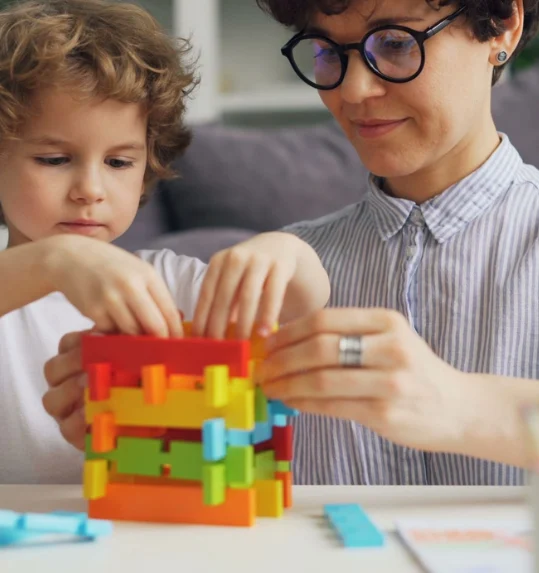
During a Floortime session, the adult follows the child’s interests and joins their activity. The adult then introduces small changes that give the child a reason to respond. This may involve giving them a problem to solve or continuing the interaction by asking engaging questions. For example, if a child is building a tower, the adult might join in by handing them blocks and waiting for the child to show which one they want next. Because the two approaches start from different places, it can help to compare ABA therapy vs DIR/Floortime directly, and some families look specifically at Floortime vs ABA when deciding how much structure their child needs.
Social Skills Training and Parent-Mediated Interventions
Some parts of therapy focus on what happens beyond the therapy room. Social skills training and parent-mediated interventions are also common alternatives to ABA therapy that some families use to complement a structured program. Social skills training gives children with autism direct instruction and practice in interacting with other people. For example, a session might focus on working through a disagreement with a peer.
In parent-mediated interventions, parents learn how to work on specific treatment goals during everyday activities with their child. A therapist teaches them strategies to use during routines and interactions already happening at home. This gives the child opportunities to work on the same skills between therapy sessions without turning the day into a series of therapy exercises.
How to Choose the Right Therapy for Autism
Choosing a therapy starts with the question, “What does this person need to do that they cannot do yet?” The answer could involve requesting food, tolerating toothbrushing, joining a classroom activity, eating enough foods to meet nutritional needs, or managing anxiety before leaving home.
Next, match the goal to the provider’s area of practice.
- A speech-language pathologist addresses communication, speech, and even swallowing when needed.
- An occupational therapist works on participation in daily activities, including dressing and handwriting. They also help with responding to sensory input.
- ABA teaches defined skills and examines the conditions surrounding behaviors.
- CBT addresses connections between thoughts, emotions, and actions.
Some goals involve more than one provider, but each therapist should have a distinct role.
Many treatment plans combine ABA with speech, occupational, and sometimes feeding therapy too, so each skill area has a dedicated provider working toward the same overall goals.
The child’s age, communication style, developmental level, and learning preferences also shape the plan. Talk-based CBT requires skills a young child or a person with limited language may not yet have. The therapy format should fit the learner rather than forcing the learner to fit a preset program.
Before enrolling, ask the provider what they plan to target and how they will measure progress. Ask what an actual session will look like, too. The provider should explain how each goal relates to daily life and how they will adjust treatment if the data do not show progress. Families should also ask how the therapist handles distress, refusal, sensory needs, and communication attempts. Regular reviews give the family and providers a chance to examine what the child has learned and where barriers remain. They’re also a chance to check whether the current services still match the goals.
Choosing the Perfect Type of Therapy for Autism with On Target ABA
A child does not need every therapy associated with autism. The services they receive should reflect the skills they are working on and the type of support those skills require.
On Target ABA provides ABA in clinics, homes, schools, and daycare settings. Some of its full-day programs also include speech and occupational therapy, combining multiple types of therapy for autism so children who need those services can receive them alongside ABA. The treatment team sets goals based on the child’s current needs and reviews progress as those needs change.
If you are considering ABA or exploring alternatives to ABA therapy, contact On Target ABA to discuss the options available at your location.
FAQs on Different Types of Therapy for Autism
What is the most effective therapy for autism?
The most effective therapy for autism depends on what the person needs support with, as no single therapy addresses every aspect of autism. A child working on communication, for example, may need a different provider from one working on eating or managing anxiety. An assessment identifies these needs and determines which type of therapy fits them.
Do children with autism need more than one type of therapy?
Yes, many children work with several providers because their goals fall into different areas. For example, a child might see a speech-language pathologist for communication and an occupational therapist for dressing and handwriting. When multiple therapies form part of the plan, providers should coordinate their goals and avoid giving the family conflicting instructions.
At what age should autism therapy begin?
Autism therapy should begin when a person with autism has a skill gap or barrier that requires support. Young children do not need to wait for a formal autism diagnosis before receiving services such as speech, occupational, or feeding therapy. Teenagers and adults also begin therapy when new demands arise at school, work, home, or in relationships.
How many hours of therapy does a child with autism need?
The number of hours a child needs depends on their goals, health, schedule, and response to treatment. A focused speech goal requires a different schedule from a program addressing communication, self-care, and safety throughout the day. More hours do not automatically produce more progress. The schedule should leave time for school, family life, rest, play, and using new skills outside therapy.
Does autism therapy try to stop behaviors typical of autism?
No, autism therapy should only target behaviors that restrict communication, independence, safety, or participation—not harmless traits simply because they appear autistic. Repetitive movement, limited eye contact, or a preference for routine does not require treatment unless it causes distress or prevents the person from taking part in an activity they value.
How do parents know whether a therapy is working?
Parents know a therapy is working when progress begins to show up in daily life, measured against the goal and starting point the provider reported before treatment began. A child may start getting dressed with fewer reminders or communicate what they want without as much prompting. For another child, progress could mean eating a broader range of foods. If the data show little change, the provider should examine the treatment plan and what needs to change rather than blaming the learner.
Does ABA therapy help with speech?
ABA can support speech development, especially for children who are not yet using words to communicate. A therapist may work on requesting, labeling, and following directions using the same step-by-step teaching methods ABA applies to other skills. For children who need more targeted support with articulation or language structure, ABA providers often coordinate directly with a speech-language pathologist, so both work toward the same communication goals.