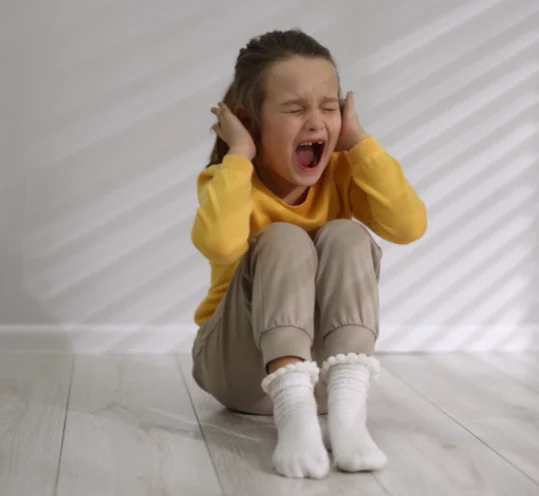
Anxiety is common among children and young adults with autism, and it often gets expressed in meltdowns, refusal, rigid routines, or trouble with transitions. ABA therapy for anxiety uses evidence-based strategies like gradual exposure, reinforcement, and coping skills training to help children face fears in manageable steps. In this guide, On Target ABA explains how ABA treatment for anxiety works and how parents can support progress at home.
ABA Therapy for Anxiety: Key Takeaways
- Many individuals with autism have high anxiety, often driven by sensory sensitivities and communication challenges, along with difficulty tolerating change.
- Anxiety in autism frequently manifests as rigidity, avoidance, meltdowns, physical complaints, or repetitive behaviors rather than verbalized worry.
- ABA treatment for anxiety uses functional behavior assessments, graduated exposure, social skills training, and coping mechanisms to replace anxiety with positive behaviors.
- Parent training ensures that exposure and coping strategies practiced in therapy also become part of daily routines at home.
- ABA therapy for anxiety is often enhanced when combined with complementary treatments such as CBT, occupational therapy, speech therapy, or medical support.
Anxiety in Children with Autism
Children and young adults with autism experience anxiety at higher rates than their neurotypical peers. In a review published on PubMed, nearly 40% of individuals with ASD were estimated to have clinically elevated levels of anxiety or at least one anxiety disorder. Several factors contribute to the presence of anxiety in people with autism, including sensory sensitivities, difficulty tolerating uncertainty or change, and challenges with communication and social interaction. When a child can’t easily express what they’re feeling or predict what comes next, everyday situations can become overwhelming.
How Anxiety Shows Up in Children with ASD
Anxiety in autism doesn’t always look like worry as we know it. Because many children struggle to put their feelings into words, it often shows up as behavioral traits.
| Behavior | How It Looks |
| Increased rigidity | Insists on routines or sameness and becomes distressed when plans change. |
| Avoidance or escape | Refusing to enter certain places or withdrawing from social situations. |
| Meltdowns | Intense emotional responses when a situation feels unmanageable. |
| Aggression or self-injury | Some children may hit, kick, or engage in self-injurious behavior to escape a stressful situation. |
| Increased repetitive behaviors | More stimming, such as rocking or hand-flapping, which can help a child self-soothe. |
| Physical complaints | Stomachaches, headaches, or sleep difficulties without a clear medical cause. |
Types of Anxiety Disorders ABA Therapy Can Address
Children and young adults with autism can experience many forms of anxiety, with specific phobias being the most common. The following are some phobias that children with autism may struggle with:
- Specific phobias: Intense fear of particular things or situations, such as dogs, loud noises, or medical visits. This is the most common anxiety disorder in children with autism.
- Social anxiety: Fear of social situations, interacting with peers, or being judged by others.
- Separation anxiety: Distress when separating from a parent or caregiver, for example at school drop-off or bedtime.
- Generalized anxiety: Ongoing, wide-ranging worry that interferes with daily routines.
- Transitions and unfamiliar environments: Difficulty with changes in routine, moving between activities, or entering new places.
Evidence-Based ABA Strategies For Anxiety
There is much evidence pointing to the positive effects of ABA for anxiety in autism. ABA strategies for anxiety are based on a simple concept: anxious behavior is learned so that it can be changed. Rather than trying to remove the anxiety, a BCBA builds a plan that teaches the child new skills to replace the anxious reactions, with plenty of reinforcement along the way.
Functional Behavior Assessment: A Starting Point for Anxiety Treatment
A functional behavior assessment (FBA) looks at what happens right before and after an anxious behavior. Through observation and caregiver interviews, the BCBA identifies the triggers and the behavior’s function. In anxiety, the function is often to escape from a feared situation. This understanding shapes subsequent interventions.
Graduated Exposure: Facing Fears Step by Step
Graduated exposure, also called systematic desensitization, is one of the best-supported ABA interventions for anxiety, especially for specific phobias and fear of unfamiliar environments. A BCBA may first show a child photos of his new classroom, then take him to visit the empty classroom, until he finally spends time there with teachers and peers. Each step is reinforced, and the child moves on only when they are ready. By using such ABA interventions for transition difficulties in unfamiliar environments, anxiety is greatly reduced.
Social Skills Training as an Anxiety Reduction Tool
Social situations that feel unpredictable may induce a great deal of anxiety. Social skills training uses modeling, role-play, and practice to teach skills such as starting a conversation, joining play, or handling disagreement. As a child becomes more confident, social situations feel less threatening.
Coping Skills and Emotional Regulation
ABA teaches coping skills as replacement behaviors, such as deep breathing, grounding techniques, using a visual schedule, or asking for a break, so the child has a safer way to handle distress. Children also learn to recognize and name their feelings, which builds emotional regulation over time.
The Role of Parents and Caregivers in ABA Treatment for Anxiety
Whether a child is receiving in-home therapy or attends sessions at a center, parents and caregivers play a central role in ABA anxiety treatment. Anxiety rarely shows up only during therapy sessions. It surfaces at bedtime, at school drop-off, and in the grocery store. That’s why most ABA programs include parent training, where the BCBA teaches caregivers to use the same strategies between sessions, so progress becomes part of daily life.
How Parents Can Support Progress at Home
As a parent, you can support therapy progress in the following ways:
- Practice exposure steps: Work through the same small, gradual steps your BCBA uses in sessions, at your child’s pace.
- Reinforce brave behavior: Praise and reward your child when they try something difficult or use a coping skill.
- Gently reduce accommodations: It’s natural to help your child avoid what scares them, but over time avoidance can strengthen anxiety. Your BCBA can help you step back gradually.
- Model calm responses: Children take cues from the adults around them, so staying calm during hard moments helps them feel safe.
- Share what you observe: Your notes on triggers and behaviors at home help the BCBA adjust the treatment plan.
Combining ABA Therapy With Other Treatments for Anxiety
Anxiety in autism is often complex and may require multiple approaches. Many children benefit from ABA for anxiety when it is supplemented with other treatments. A BCBA can work alongside other providers so everyone uses consistent goals and strategies to reduce anxiety.
Treatments That Commonly Work Alongside ABA
There are several treatments that are often used alongside ABA to help alleviate anxiety. Cognitive behavioral therapy (CBT) adapted for autism helps verbally fluent children and teens identify anxious thoughts and practice coping strategies. For some children, a psychiatrist or pediatrician may prescribe medication to manage anxiety symptoms. Occupational therapy (OT) addresses sensory sensitivities, which can be a major source of anxiety for children with autism. Speech therapy builds communication skills, helping children express their feelings and needs and reducing frustration and distress.
Help Your Child Be Calmer With On Target ABA
At On Target ABA, our BCBAs create individualized, evidence-based treatment plans that help children and young adults with autism manage anxiety and build lasting coping skills. Reach out to our team to learn how ABA therapy can help your child feel calmer and more confident.
FAQS About ABA Therapy for Anxiety
What is the best anti-anxiety medication for people with autism?
There’s no single best anti-anxiety medication for people with autism. Doctors sometimes prescribe SSRIs, but research on their effectiveness in autism is limited, and children with autism can be more sensitive to side effects. Any decision about medication should be made with a psychiatrist or pediatrician who knows your child.
How to treat anxiety in children with autism?
Treating anxiety in autism usually includes ABA strategies like graduated exposure and coping skills training, and, when suitable, modified CBT adapted for a child with strong verbal skills. A BCBA or psychologist can assess what’s driving your child’s anxiety and build an individualized plan, with parents practicing the same strategies at home.
Why do kids with autism attack when high anxiety hits?
When anxiety becomes overwhelming, some children with autism may hit, kick, or lash out because they can’t express their distress in words, and they use aggression as a way to escape a situation that feels unbearable. ABA addresses this by using a functional behavior assessment to identify the triggers, then teaching safer replacement behaviors, such as asking for a break or using a calming strategy.
Can ABA help for separation anxiety?
Yes, ABA can help with separation anxiety by gradually increasing the time and distance a child spends apart from a parent, while reinforcing calm behavior and teaching coping skills. A therapist, like those serving children in Murray, Utah, may also use visual schedules or predictable routines to make separations at school or bedtime feel safer and more manageable.
What to do if my child with ASD is having a panic attack?
Stay calm, move your child somewhere quiet if possible, reduce noise and other sensory input, and use short, simple words to guide them through a calming strategy, like slow breathing. Once the episode passes, share what happened with your child’s BCBA or doctor so they can identify triggers. Seek medical care right away if you’re unsure whether symptoms like chest pain or trouble breathing have a physical cause.