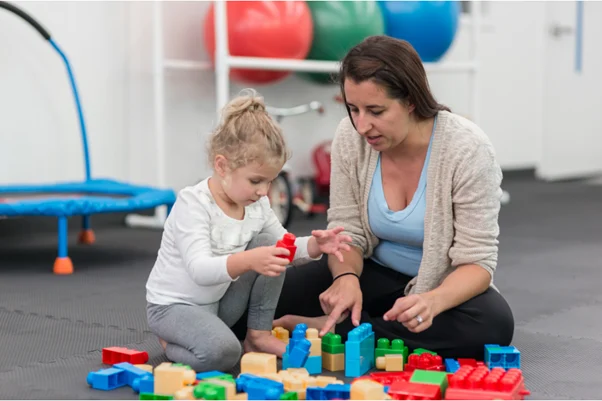
If you’re looking into therapy for your child, there are two approaches you’ll likely encounter: ABA therapy and play therapy. Both approaches involve toys, games, and play during sessions, but with different purposes and goals. When comparing ABA therapy vs play therapy, ABA therapy focuses on teaching skills and addressing behaviors that affect daily life, while play therapy focuses primarily on emotions and relationships.
At On Target ABA, we work with children with autism to build practical skills through individualized, BCBA-supervised treatment. Understanding what each therapy is designed to address and what happens during sessions gives you information to use when making decisions about your child’s care.
Key Takeaways on Play Therapy vs ABA
- When comparing ABA therapy vs. play therapy, the two approaches overlap but work toward different goals. ABA works on skills and behaviors that affect a child’s daily functioning, while play therapy uses play to help children express their emotions.
- Both ABA and play therapy involve play. In ABA, therapists use play to teach and practice targeted skills. In play therapy, it serves as the primary form of therapeutic communication.
- ABA tracks measurable goals through data collection. This helps to monitor changes and adjust treatment based on the child’s progress.
- Treatment goals influence the choice of play therapy vs ABA therapy. Communication, daily living, and behavioral goals often fall within ABA, while emotional and relational concerns fall within play therapy.
- Weighing ABA vs play therapy doesn’t always mean choosing one. Some children receive both to address different needs within the same overall treatment plan.
What Is ABA Therapy?
Applied Behavior Analysis (ABA) uses principles from the science of learning and behavior to teach skills and address behaviors. Therapists use ABA to understand why behaviors occur and identify the factors in a child’s environment that influence them. ABA is widely used with children who have autism spectrum disorder (ASD), although practitioners also use its principles with those who have other developmental and behavioral needs.
ABA therapy focuses on teaching skills and changing behaviors that interfere with daily functioning. Examples include communicating needs, following routines, getting dressed, taking turns, and responding to instructions. The therapist breaks a skill into smaller parts and uses reinforcement as the child practices each step.
ABA programs also use data to track what happens during therapy. During sessions, the therapist records how the child responds to what they are learning. This shows what the child has mastered and where they are getting stuck. This helps the therapist decide whether to change how they teach a skill.
What Is Play Therapy?
Play therapy is a therapeutic approach in which children use play to communicate and explore their experiences and emotions. It recognizes that children often express themselves through play rather than talking about their experiences in the same way adults do.
During play therapy, a therapist provides toys, games, art materials, or other forms of play and observes how the child interacts with them. Depending on the approach, the child may either direct the session, or the therapist will introduce particular activities and themes. The therapist uses the child’s play to identify patterns in their behavior and emotional expression. This allows them to work on areas such as emotional regulation and social interaction.
Key Differences Between ABA Therapy and Play Therapy
When comparing play therapy vs ABA, both involve working with children, but they differ in what they target and what happens during therapy sessions. These differences shape what a therapy session looks like and what the child and therapist work on together:
1.Goals
ABA typically sets specific, observable goals related to behavior and skill development. For example, a child may work on asking for something they need or completing a self-care task. Play therapy sets goals around a child’s emotional and social development, such as expressing how they are feeling or building healthier ways of relating to others.
2. Methods
In ABA, the therapist teaches and practices skills with the child, using encouragement and support as they learn. The therapist also tracks what is working and where the child needs more work. In play therapy, the play itself is part of the therapeutic process. The therapist follows or guides the child’s play to explore what the child is expressing and experiencing.
3. Environment
ABA often takes place where the child actually uses the skills they are learning, such as at home or school. Play therapy usually takes place in a therapy room, where the child has access to toys and other materials they can use to play and express themselves.
4. Providers
A Board Certified Behavior Analyst (BCBA) usually oversees ABA treatment, while Registered Behavior Technicians (RBTs) or other trained staff carry out much of the day-to-day therapy. Play therapists, on the other hand, are licensed mental health professionals trained to use play as part of therapy.
ABA vs Play Therapy for Children with Autism
For children with autism, the question is less about which therapy is better overall and more about what the child is working on. A child may need support with different skills or aspects of daily activities, and each therapy approaches these needs differently.
Researchers have studied ABA treatment for children with ASD extensively. Studies have found improvements in skills such as communication, although results differ from child to child.
Play-based therapies have also been studied for children with autism. Some research has found improvements in communication and social interaction. However, play therapy includes several approaches, so the findings vary depending on the type of therapy studied.
When deciding between the two, families and treatment teams look at the goals they want therapy to address. In some cases, this means choosing one approach; in others, different therapies form part of the same treatment plan.
Combining ABA and Play Therapy
ABA and play therapy do not always have to be an either-or choice. A child may receive both, with each therapy focusing on a different need. For example, an ABA therapist may teach a child how to start an interaction with another child, while a play therapist works with them on the emotions and relationships involved in interacting with others.
Play-Based ABA Therapy
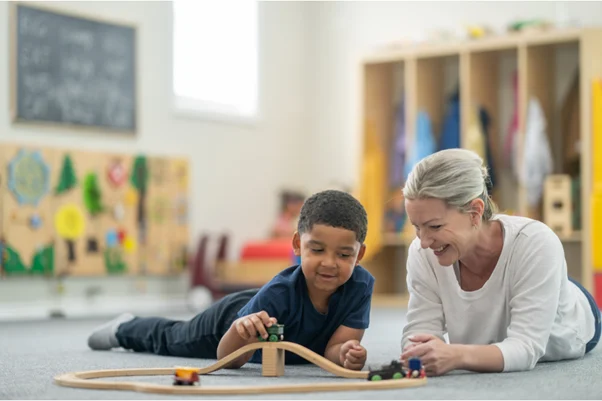
Play-based ABA therapy uses play as the main way to teach skills, especially with young children. Instead of teaching every skill through structured exercises, therapists often use toys, games, and activities the child already enjoys. Therapists use these moments to teach and reinforce goals.
For example, while playing with a train set, a therapist may encourage a child to ask for a particular piece or take turns adding cars to the train. This gives the child a chance to practice skills while doing something they enjoy. Natural Environment Teaching (NET) uses the same idea: teaching and practicing skills as opportunities arise during play-based ABA therapy to introduce skills used in everyday activities.
How to Choose Between ABA Therapy and Play Therapy
Choosing ABA vs play therapy starts with identifying what you want the therapy to address.
ABA may be a better fit when the goals involve learning targeted skills or changing behaviors that affect everyday life. For a child with autism, this might include communicating wants and needs, developing self-care skills, participating in school routines, interacting with other people, or reducing behaviors that pose a safety risk or interfere with day-to-day activities.
Play therapy may be a better fit when a child is struggling with their emotions or relationships. For example, they may have trouble expressing how they feel or be working through something that has happened. Through play, they have another way to express and make sense of what they are experiencing.
Age, communication abilities, current skills, and the concerns that prompted the family to seek therapy also inform the decision. Parents can discuss these factors with their child’s pediatrician, psychologist, or other members of the treatment team and ask prospective providers what goals they would recommend and how they would measure progress.
Support at On Target ABA
At On Target ABA, we provide individualized ABA therapy based on each child’s needs and treatment goals, in our clinics or at home. Our team works with children and families to build practical living skills while addressing behaviors that interfere with everyday activities.
If you’re considering ABA therapy for your child, or want to learn more about ABA therapy vs play therapy, contact On Target ABA to learn more about our services and the next steps for getting started.
Frequently Asked Questions on ABA Therapy vs Play Therapy
Is ABA therapy the same as play therapy?
No, ABA and play therapy sometimes look similar because both may involve toys and games, but therapists use play for different reasons. In ABA, play often provides a way to teach and practice skills. In play therapy, children use play to express and work through their emotions and experiences.
Is ABA or play therapy better for children with autism?
Neither ABA nor play therapy is better for every child with autism; it depends on what you want therapy to help your child with. ABA may be a better fit for developing everyday skills or working on distinct behaviors, while play therapy may suit a child who needs support with emotions or relationships. Some children receive both for different reasons. If you’re not sure where to start, your nearest On Target ABA location can walk you through your options.
Can a child receive ABA and play therapy at the same time?
Yes, some children receive both ABA and play therapy, with each one supporting them in a different way. For example, a child may work on communication or everyday skills during ABA and use play therapy to work through emotions or relationships. If a child is working with both an ABA therapist and a play therapist, the two can communicate so their approaches support rather than conflict with each other.
Does ABA therapy include play?
Play is part of many ABA programs, particularly for young children. An ABA therapist might use toys, games, or activities the child chooses to teach communication, turn-taking, following instructions, or other skills. The therapist uses these activities to work toward clear goals and tracks the child’s progress.
How do I know which therapy my child needs?
Choosing the right therapy for your child will depend on what you want your child to get out of therapy. If your child needs support with communication, everyday skills, learning, or particular behaviors, ABA may be worth exploring. If you’re more concerned about how your child is dealing with emotions, relationships, or experiences, play therapy may be a better fit. For some children, these needs overlap, and their treatment plan includes both.