
If your child has been diagnosed with autism, you’ve likely come across the term “ABA therapy”, whether from a pediatrician or diagnostic evaluation. ABA Therapy is one of the most widely recommended interventions for children with autism spectrum disorder (ASD), grounded in the science of learning and behavior.
ABA therapy is often one of the first recommendations families hear, but that doesn’t make it less confusing, especially with so many therapy types and provider options to navigate. In this guide, On Target ABA breaks down what ABA therapy is and how it works in practice to help children with autism, so you can move forward with clarity.
Key Takeaways: What is ABA Therapy?
- ABA is one of the most researched and widely recommended interventions for children with autism.
- Every ABA treatment plan is individualized, built around your child’s strengths and needs.
- Building communication and daily functioning skills is a core focus of ABA sessions, alongside reducing harmful behaviors that get in the way of daily functioning.
- A Board Certified Behavior Analyst (BCBA) typically oversees ABA therapy, with a team of trained behavior technicians running day-to-day sessions.
- On Target ABA provides individualized ABA therapy and autism diagnostic services.
What Does ABA Stand For?
ABA stands for Applied Behavior Analysis. But the ABA therapy meaning goes beyond the acronym. Each part of that name tells you something important about what the therapy involves.
Here is the ABA meaning broken down piece by piece:
- Applied means the therapy focuses on behaviors that matter to a person’s day-to-day life, like communication needs or following instructions, rather than behaviors studied only in a lab setting.
- Behavior refers to anything a person does that can be observed and measured. This includes speaking and eye contact, as well as more challenging behaviors like tantrums or self-injury.
- Analysis means decisions are driven by data. Behavior analysts collect and review information about a child’s progress, then adjust the approach based on what the data shows is working.
Put together, ABA is an evidence-based approach to understanding why behaviors happen and how to change them in ways that improve a person’s quality of life.
What Are ABA Services and What Does ABA Help With?
ABA therapy is a structured approach that uses the principles of learning theory to help children with autism build new skills and reduce behaviors that interfere with learning. It can also address behaviors that affect a child’s safety or make it harder for them to develop independence.
So, what is ABA therapy used for in practice? At its core, ABA is built on a simple idea: behavior is shaped by what happens before and after it. By carefully arranging a child’s environment and responses, therapists can encourage helpful behaviors and gradually reduce unhelpful ones.
For children with autism, this often means working on skills that don’t always develop naturally, such as making eye contact, initiating conversation, sharing attention with another person, or tolerating changes in routine. ABA breaks these broader goals into small, teachable steps and reinforces a child’s progress along the way. This ensures new skills become lasting habits rather than one-time successes.
Autism now affects roughly 1 in 31 children in the United States, according to the CDC, and ABA remains one of the most commonly recommended early interventions for families navigating a new diagnosis.
How Does ABA Therapy Work?
ABA therapy works by breaking complex skills into smaller, manageable components, teaching each piece systematically, and reinforcing progress so skills stick. A behavior analyst begins with a thorough assessment of a child’s abilities and then builds a treatment plan around specific, measurable goals.
ABA Therapy is Evidence-Based
ABA is evidence-based, grounded in decades of published research, and is recognized by healthcare professionals as an effective treatment for autism spectrum disorder. Unlike interventions with limited or anecdotal support, ABA relies on data collection: therapists track a child’s responses session by session and use that information to decide whether a strategy is working or needs to change. This ongoing measurement gives families a clear, objective picture of progress.
ABA Therapy Creates Personalized Treatment Plans
No two children with autism have identical needs, so ABA is never a one-size-fits-all program. A Board Certified Behavior Analyst (BCBA) conducts an initial assessment covering communication, social skills, motor skills, and behavior, then designs a plan tailored to that child. Goals reflect the child’s developmental level and the family’s priorities, whether that’s preparing for kindergarten, reducing mealtime struggles, or building safety skills like staying close to a caregiver in public. As the child progresses, the plan is regularly updated.
ABA Therapy Improves Communication and Language Skills
Communication challenges are common in autism, and the purpose of ABA therapy is to directly target both verbal and nonverbal communication. This can include teaching a child to request items they want, label objects and people, answer questions, or use alternative tools such as picture exchange systems or speech-generating devices for children who are nonverbal or minimally verbal.
Therapists also work on the social side of communication, such as taking turns and understanding gestures, so children can connect more easily with people around them.
ABA Therapy Strengthens Daily Living and Adaptive Skills
Beyond communication, ABA therapy helps children build the practical, everyday skills that support independence. This is often called adaptive or daily living skills. It might include getting dressed, brushing teeth, using the toilet, preparing simple snacks, or following a morning routine without prompting. These skills are broken into small steps, with support gradually reduced as the child masters each part. This builds confidence-filled independence at home and in social settings.
ABA Therapy Reduces Challenging Behaviors
Behaviors like tantrums and aggression, as well as self-injury, usually serve a purpose for a child, even when that purpose isn’t obvious to the people around them. Before addressing a challenging behavior, a behavior analyst conducts a functional assessment to understand what’s driving it, such as whether the child is seeking attention or trying to escape a demand. Once the function is identified, the therapy team teaches a more appropriate way to meet that same need, rather than trying to suppress the behavior itself. This tends to produce longer-lasting results than punishment-based strategies, because it addresses the root cause instead of just the symptom.
What Happens During an ABA Session
Now that we’ve defined what ABA therapy is, let’s look at how sessions are structured for maximum growth and development.
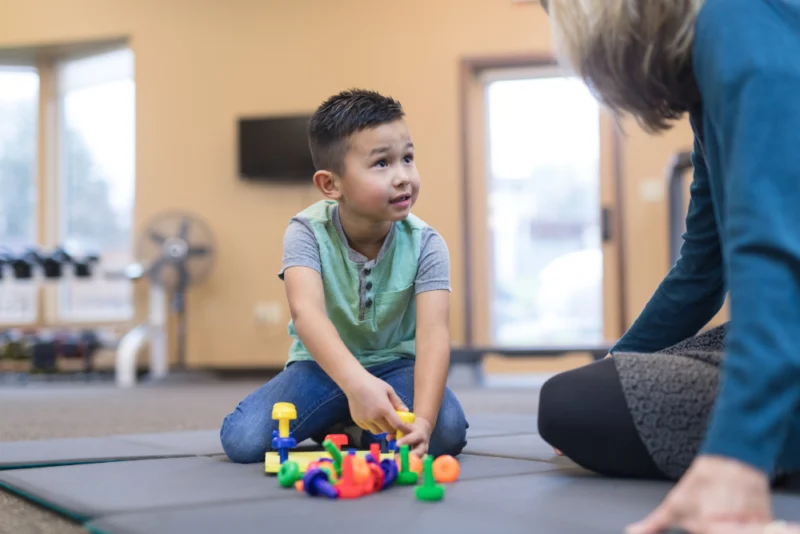
ABA sessions can look different depending on a child’s age and goals, but most share a similar structure. A session typically opens with a warm-up activity to build rapport, before moving into a mix of structured teaching. This is where a skill is taught in a focused, one-on-one format, through natural teaching. In this structure, the same skill is practiced during play and everyday routines. Throughout, the therapist records data on the child’s responses and uses positive reinforcement, such as praise or a preferred activity, to encourage effort and progress.
Sessions typically close with a wind-down activity and a brief update for caregivers, so families stay informed about what was worked on and how their child responded. Depending on the treatment plan, therapy can take place in various locations, including an ABA clinic, home, or school, with session length and frequency tailored to the child’s needs.
Who Benefits From ABA Therapy?
ABA therapy is most commonly associated with autism spectrum disorder and is especially effective when started early, though it can benefit children at different stages of development. Children who struggle with communication, social interaction, daily living skills, or behaviors that interfere with learning tend to benefit most. ABA can also support children with other developmental or behavioral needs, including ADHD and certain intellectual disabilities, when used to target specific, measurable goals.
Because plans are individualized, ABA can be adjusted across a wide range of ages and ability levels, from toddlers building early communication skills to older children and teens working on independence or social skills.
ABA Therapy at On Target ABA
Deciding on a therapy approach for your child is a big step, and it’s natural to have questions about what ABA therapy is and whether it’s the right fit. At On Target ABA, our team works closely with you to provide individualized ABA therapy alongside comprehensive autism diagnostic evaluations, so families can move from questions to a clear plan.
If you’re exploring ABA therapy for your child, our team is here to walk you through what to expect and answer any questions to help you determine the right next steps. Reach out to On Target ABA today to learn more about our services and schedule a consultation.
FAQs: What is ABA?
What does ABA help with?
ABA therapy helps children develop the skills they need to communicate and function more independently, while reducing behaviors that get in the way of learning or safety. In practice, this can look very different from one child to the next. What ABA helps with depends on what that child and their family are working toward.
Is ABA therapy only for children with autism?
No, ABA therapy is not limited to children with autism. It’s most widely used and researched for autism spectrum disorder, but its underlying principles can also support children with ADHD, intellectual disabilities, and other developmental needs.
What is an ABA therapist?
An ABA therapist is a professional trained to deliver Applied Behavior Analysis therapy, most often a Registered Behavior Technician (RBT) working under the supervision of a Board Certified Behavior Analyst (BCBA). The BCBA designs and monitors the treatment plan, while the RBT typically delivers day-to-day sessions and collects data on the child’s progress.
How long does a child need ABA therapy?
There’s no fixed timeline for ABA therapy. Treatment length depends on a child’s individual goals and progress, and plans are regularly reassessed to determine next steps. Some children continue for several years, while others move to reduced hours or transition out of services sooner as goals are met.
Is ABA therapy covered by insurance?
Yes, many insurance plans cover ABA therapy for autism spectrum disorder. Most U.S. states require coverage for medically necessary autism treatment, though specifics vary by plan and provider. It’s worth confirming details like session limits and diagnosis requirements directly with your insurer.
At what age should ABA therapy start?
ABA therapy can begin as early as toddlerhood. It’s generally considered most effective when started early, since young children respond well to consistent, repeated skill-building. That said, children and teens can still benefit from starting ABA later.