When your child is referred for ABA therapy, one of the first steps is an ABA assessment. But why is an assessment needed before therapy begins, and what information does it provide? Before creating a treatment plan, the BCBA needs to understand your child’s current skills and the areas where improvement is needed. The assessment gathers information about your child’s communication and daily routines, and examines their behavior and learning skills.
At On Target ABA, our ABA assessments provide the information used to create your child’s treatment plan. The clinical team uses the results to set treatment goals and monitor progress. This is used as a base that can be adjusted as your child develops. Read on as we explore the different types of assessments in ABA.
Key Takeaways on ABA Assessments
- An ABA assessment measures your child’s skills before therapy begins and establishes a starting point for treatment.
- A Board Certified Behavior Analyst (BCBA) uses the assessment results to decide which skills to teach first and which treatment goals to include in your child’s plan.
- ABA reassessments compare new results with earlier assessments to show which skills your child has developed and where instruction should continue.
- ABA assessment results also document your child’s progress and provide the information insurance providers often require to authorize ABA services.
What Is an ABA Assessment?
An ABA therapy assessment collects information about a child‘s current skills before therapy begins. It establishes a starting point by measuring areas such as:
- Communication
- Social interaction
- Daily living skills
- Play
- Behavior
The assessment also identifies skills the child already demonstrates and skills they have not yet developed.
A BCBA conducts the assessment using direct observation and caregiver interviews with standardized assessment tools. The findings identify the skills the child will work on and the behaviors the treatment plan will address so that the BCBA can measure progress. ABA assessments continue throughout therapy. Periodic reassessments compare the child‘s current performance with earlier results and provide updated information for treatment planning.
Why Is an Assessment Important in Behavior Analysis?
The ABA therapy assessment gives the BCBA the information needed to decide which skills your child will work on first. Without an assessment, treatment goals may not match your child’s current abilities or the order in which new skills should be introduced. Many ABA assessments use criterion-referenced tools, which compare your child’s skills with a developmental sequence rather than with other children.
Assessment results also play a role in insurance coverage for therapy. Insurance providers often require documented assessment results before authorizing ABA services, and many require periodic reassessments to confirm therapy is still medically necessary.
When Are ABA Assessments Conducted?
An ABA assessment takes place before therapy begins. This provides the information your child’s BCBA needs to create an initial treatment plan. It measures your child’s current skills and identifies areas for instruction.
Reassessments take place throughout therapy, often every six months. By comparing new results with earlier assessments, the BCBA can see which skills your child has developed and whether treatment goals should be updated. An additional assessment may also be recommended if progress slows over an extended period or after a major change in your child’s life, such as starting a new school or moving to a different home.
Primary Types of Assessments In ABA
Behavior analysts use several types of assessments because no single tool measures every aspect of a child’s development. Some assessments focus on communication and learning skills, while others examine behavior, daily living skills, or identify the toys and activities a child prefers during therapy.
Social Skills Assessments for ABA
Skills assessments measure a child‘s abilities across areas such as communication, social interaction, play, daily living, and academic readiness. The results show which skills are already part of the child‘s repertoire and which skills the child has not yet developed.
- VB-MAPP (Verbal Behavior Milestones Assessment and Placement Program): The VB-MAPP is a verbal behavior assessment that measures language, communication, social, and learning skills using developmental milestones. Many providers use it with young children.
- ABLLS-R (Assessment of Basic Language and Learning Skills – Revised): The ABLLS-R evaluates a broad range of functional skills, including language, self-help, motor, academic, and classroom skills. The results organize teaching around individual skill areas.
- PEAK (Promoting the Emergence of Advanced Knowledge): PEAK measures language and cognition learning skills, including those that extend beyond direct instruction, such as generalization and problem-solving.
Functional Behavior Assessments (FBA)
An Functional Behavior Assessment is a behavioral assessment that examines why a behavior occurs. Rather than focusing only on what the behavior looks like, the assessment identifies what the child gains or avoids by engaging in it. For example, a child may scream to gain a parent’s attention or refuse a task to avoid an activity they find difficult. The results identify the behavior’s function and guide the development of behavior intervention strategies.
Preference Assessments
Preference assessments identify activities, toys, foods, or other items a child chooses consistently. Behavior analysts use this information to select reinforcers during therapy and determine whether preferences change over time.
Adaptive Behavior Assessments
Adaptive behavior assessments measure how independently a child completes everyday tasks at home, school, and in their general lives. They look at skills such as getting dressed, following routines, preparing simple meals, and participating in activities outside the home.
- AFLS (Assessment of Functional Living Skills): AFLS measures everyday living skills across home and community, as well as vocational settings. The results identify skills that require additional instruction.
- Vineland Adaptive Behavior Scales: The Vineland measures communication, daily living skills, socialization, and motor skills through caregiver interviews or questionnaires. Providers often use it during diagnosis and treatment planning to track progress.
- EFL (Essential for Living): Essential for Living focuses on functional communication and daily living skills for children with moderate-to-severe disabilities. The assessment prioritizes skills related to safety and independence to increase participation in everyday life.

What Caregivers Can Expect During and After an ABA Assessment
The assessment in ABA includes information from caregivers as well as direct observation. A BCBA will usually ask questions about your child’s communication, daily routines, behavior, medical and developmental history, and the situations where your child succeeds or requires assistance. You may also complete questionnaires or rating scales before or during the assessment.
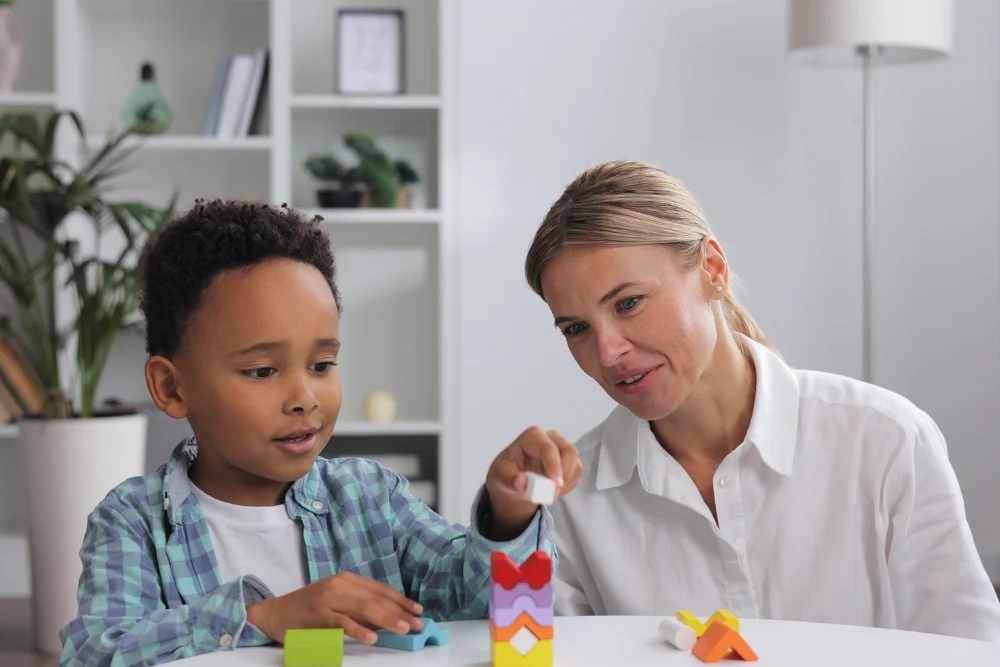
The BCBA will observe your child during everyday activities and conduct activities designed to measure specific skills. Looking at your child’s behavior in different settings provides a broader picture than relying on formal testing alone. After the assessment, the BCBA should explain the results in clear language and review the recommended treatment goals. They can also answer your questions about the next steps.
Questions Parents Can Ask at ABA Assessments
An ABA assessment also gives you an opportunity to learn how the BCBA reached their conclusions and how those findings will be used to develop your child’s treatment plan. Questions you may want to ask include:
- Which assessment tools are you using, and why?
- Which skills are you evaluating today?
- What strengths have you observed so far?
- Which skills would you prioritize first, and what led to that decision?
- How will you track my child’s progress?
- When will my child be reassessed?
- How can I support these goals at home?
Schedule an ABA Assessment at On Target ABA
An ABA assessment is the first step in building a treatment plan based on your child’s individual skills and needs. If you would like to schedule an assessment or learn more about ABA services, contact On Target ABA. A BCBA will explain the process and discuss the results with you before therapy begins.
Frequently Asked Questions on Assessments in ABA
What is a behavioral assessment in ABA?
A behavioral assessment in ABA is the process therapists use to understand a child’s strengths and needs behind specific behaviors before creating a treatment plan. It typically involves direct observation and data collection to identify what’s driving behavior and what skills to target.
How long does an assessment in ABA take?
Some ABA assessments take a few hours, while others take place over multiple sessions. The length of an assessment largely depends on the child’s age and skills, as well as the assessment tools the BCBA uses.
Who conducts an ABA assessment?
A Board Certified Behavior Analyst (BCBA) conducts the assessment in ABA. The BCBA observes the child and gathers information from caregivers to develop the treatment plan.
Does my child need to prepare for the ABA assessment?
No special preparation is required for your child before an ABA assessment. We recommend you bring information about your child’s medical history, school services, previous evaluations, and current concerns to give the BCBA a more complete picture of your child’s needs during the assessment.
Will I receive a copy of the ABA assessment results?
Yes, most ABA providers give families a written report or review the findings during a meeting. The report outlines the child’s skills and therapy recommendations.
Are ABA assessments only for children with an autism diagnosis?
No. ABA assessments measure skills and behavior rather than diagnose autism. Providers also use them with children who receive ABA services for developmental delays or other conditions that affect communication, learning, or daily living skills.
How often are ABA assessments repeated?
Many ABA providers complete a reassessment in ABA about every six months. The schedule may also change based on the child’s progress or insurance requirements.